Tarangire National Park Safari 2026: Tanzania’s Quiet Giant

Tarangire National Park Safari 2026: Tanzania’s Quiet Giant
There are moments in Africa when the landscape feels older than memory.
Tarangire is one of those places.
You notice it first through the trees.
Not ordinary trees.
Baobabs.
Massive ancient silhouettes standing across the plains like forgotten monuments from another world. Their trunks swollen and scarred by centuries of drought, elephant tusks, storms, and heat. Some seem almost too large to be alive at all.
Then comes the dust.
Fine red earth drifting behind elephant herds moving slowly toward the river while sunlight breaks through acacia woodland in long golden beams. Somewhere ahead, zebras bark nervously. A lion is nearby. You cannot see it yet. But the entire bush seems aware of its presence.
This is Tarangire National Park.
Wild. Quiet. Immense.
Overshadowed for years by the fame of the Serengeti and Ngorongoro, yet deeply loved by guides, photographers, repeat travellers, and people who return to Tanzania searching for something more textured than a checklist safari.
Because Tarangire is not a park that tries to impress you immediately.
It unfolds slowly.
Morning by morning.
Track by track.
Elephant herd by elephant herd.
And by the time you leave, many travellers realise something unexpected:
This was the park they felt most connected to.
Where Tarangire National Park Is Located
Tarangire National Park lies in northern Tanzania, southwest of Arusha, along the country’s famous northern safari circuit.
It sits between several iconic destinations:
Many itineraries begin here.
And honestly, that is a good thing.
Because Tarangire introduces travellers gently into safari life.
The transition from city to wilderness feels gradual. Villages fade into open countryside. Maasai herders move cattle through dry grasslands. Baobabs begin appearing beside the road. Then suddenly, wildlife starts showing itself before you even fully realise the safari has begun.
Giraffes browsing beside acacias.
Warthogs running with tails upright.
Elephants crossing distant hills.
Tarangire wastes very little time.
The First Feeling of Tarangire
Every safari park has a personality.
Serengeti feels endless.
Ngorongoro feels dramatic.
Lake Manyara feels intimate.
Tarangire feels ancient.
There is something deeply grounding about the park’s atmosphere. Perhaps it is the baobabs. Perhaps it is the slow movement of elephants across the valley floor. Or perhaps it is the silence.
Real silence.
Not emptiness.
Alive silence.
Wind moving through dry grass.
Distant guinea fowl calling.
Branches cracking somewhere inside the woodland.
Tarangire often feels less crowded than other northern parks, especially outside peak migration months. That space changes the emotional experience completely.
You do not feel like you are watching nature from a queue of vehicles.
You feel inside it.
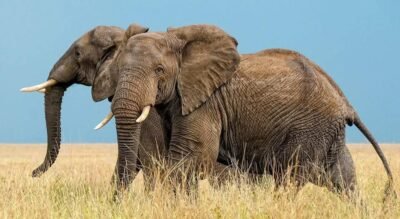
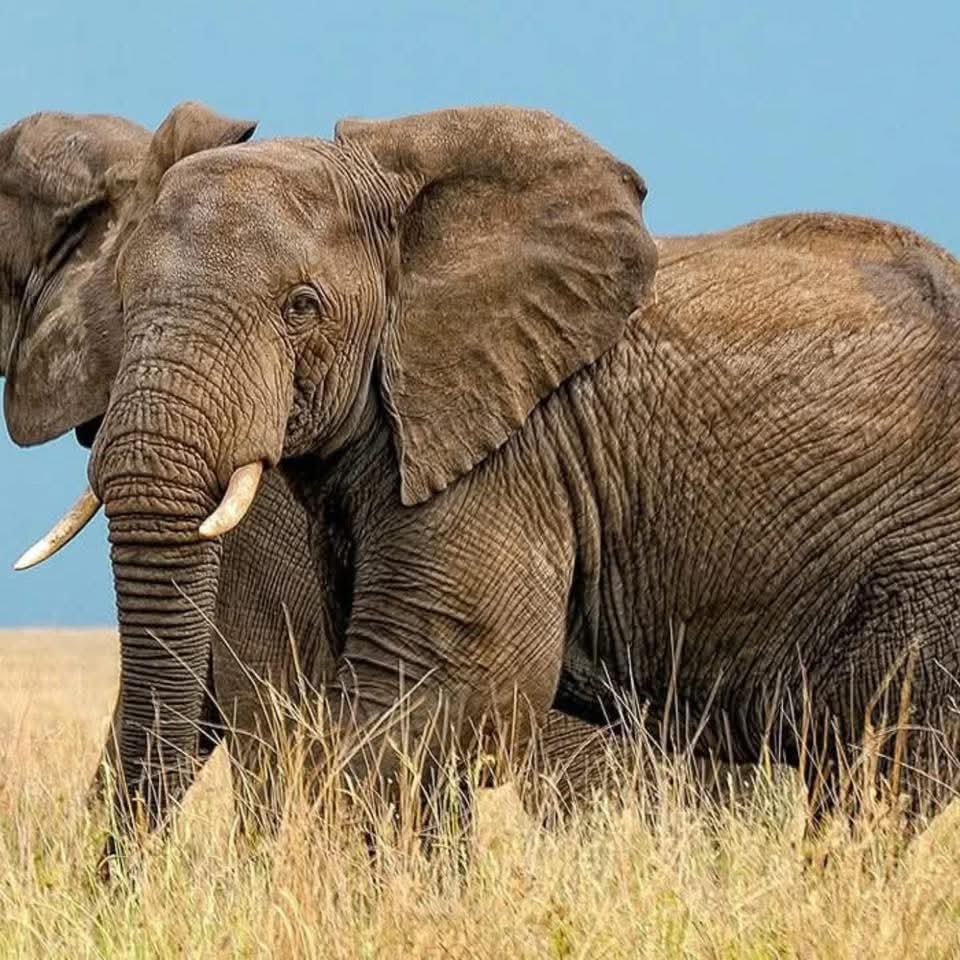
Why Tarangire Is Famous for Elephants
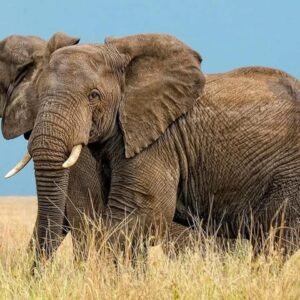
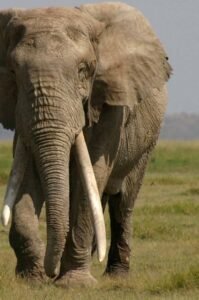
If there is one animal that defines Tarangire, it is the elephant.
Not just because there are many.
But because elephants seem to belong to this landscape in a particularly powerful way.
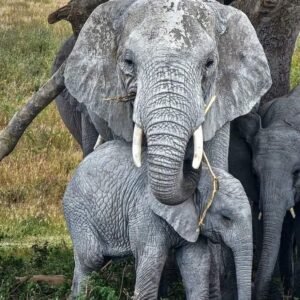
During dry season, enormous herds gather near the Tarangire River. Sometimes hundreds move through the valley in loose formations — families, calves, giant bulls, restless teenagers pushing each other through dust.
The encounters here often feel deeply personal.
You notice individual behaviour:
- Mothers touching calves gently with trunks
- Young bulls mock-fighting beside the road
- Older elephants standing motionless beneath baobabs
- Herds moving silently at dusk
And because the park’s vegetation is varied rather than completely open, elephant sightings frequently happen at close range.
You hear breathing.
Low rumbles.
Feet against dry earth.
For many travellers, Tarangire becomes the place where elephants stop feeling like safari icons and start feeling emotionally real.
The Tarangire River: Lifeline of the Dry Season
The river shapes everything here.
During Tanzania’s dry months, much of the surrounding landscape becomes harsh and thirsty. Seasonal water sources disappear. Dust thickens. Grass shortens.
But the Tarangire River continues flowing.
And wildlife follows it.
This creates one of East Africa’s most extraordinary concentrations of animals outside the Serengeti migration.
Along the riverbanks you may see:
- Elephants
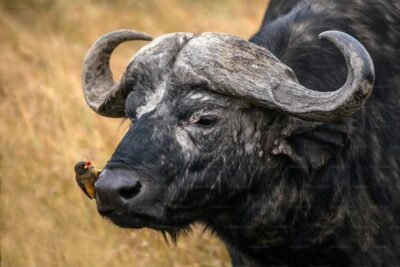
- Buffalo
- Zebras
- Wildebeest
- Giraffes
- Antelope
- Lions
- Leopards
Predators understand the rhythm too.
Where prey gathers, danger waits nearby.
Lions in the Long Grass
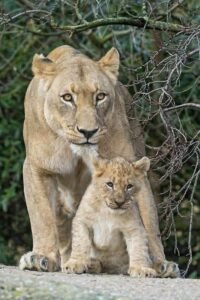
Tarangire’s lions are not always easy to spot.
This is not open Serengeti country where predators stretch visibly across endless plains.
Here lions disappear.
Into tall grass.
Into riverbeds.
Into woodland shadows.
And that makes sightings more exciting.
A guide may stop suddenly beside what appears to be empty vegetation. Everyone scans uselessly for several seconds before finally noticing amber eyes staring from beneath a bush only metres away.
Then comes the realisation:
The lion was watching first.
Tarangire rewards patience like this.
The park asks travellers to slow down and observe more carefully.
Baobab Trees: The Giants of Tarangire
The baobabs alone make Tarangire unforgettable.
Some trees here are believed to be hundreds — possibly over a thousand — years old.
Their trunks store water through dry seasons. Elephants sometimes strip bark from them during drought periods, leaving scars that slowly reshape the trees over decades.
At sunrise and sunset, the baobabs dominate the horizon like prehistoric sculptures.
Photographers love them.
Guides respect them.
And travellers often find themselves strangely emotional standing beside them.
Because baobabs create perspective.
Human urgency feels small around trees that have survived centuries of drought, migration, wildlife movement, and changing generations.
Birdlife in Tarangire
Tarangire is often associated with elephants, but birdlife here is extraordinary.
Especially for travellers who begin noticing the smaller details of safari.
More than 500 species have been recorded in the ecosystem, including:
- Lilac-breasted rollers
- Yellow-collared lovebirds
- Kori bustards
- Hornbills
- Fish eagles
- Ostriches
- Bee-eaters
- Secretary birds
And during green season, colours intensify dramatically.
Birds become almost impossibly vibrant against fresh grass and storm-dark skies.
Even people who never expected to care about birdlife often become fascinated after a few days here.
Safari changes attention.
The Dry Season Drama
June to October
This is when Tarangire becomes truly spectacular.
As surrounding areas dry out, wildlife funnels toward permanent water sources inside the park. Animal density increases dramatically, especially near the river.
Game drives during this period can feel cinematic:
- Giant elephant herds crossing dusty tracks
- Buffalo packed densely along riverbanks
- Predators waiting in shade
- Dust glowing gold at sunset
Dry season also offers easier wildlife visibility because vegetation becomes thinner.
For first-time safari travellers, this period is often ideal.
The Green Season Surprise
Many travellers underestimate Tarangire during green season.
That is a mistake.
From roughly November through May, parts of the park transform completely. Grasslands turn emerald green. Storm clouds build dramatically across the sky. Migratory birds arrive. Young animals appear everywhere.
And perhaps most importantly:
The atmosphere changes.
The park feels softer. Wilder. More unpredictable.
Afternoon rainstorms roll across the plains while shafts of sunlight break through dark clouds in sudden bursts. Elephants move through wet grass. The air smells alive.
Photographers often love this period most.
Safari Mornings in Tarangire
The mornings here carry a particular kind of beauty.
You leave camp while the sky is still pale silver. Hyena tracks cut across the road. Night air lingers cool beneath the trees.
Then slowly the bush wakes.
Baboons climb down from sleeping trees.
Francolins call from the grass.
Giraffes emerge through morning mist.
And somewhere ahead, elephants are already moving toward water.
There is a calmness to early safari hours that is difficult to explain to people who have never experienced it.
You begin noticing small things:
Fresh paw prints.
Dust hanging in cold light.
The smell of crushed wild sage beneath tyres.
Travel slows the mind here.
Leopards of Tarangire
Leopards exist in Tarangire with remarkable elegance and secrecy.
You rarely forget your first sighting.
Perhaps one draped over a sausage tree branch at dusk. Or crossing the road silently after dark. Or hidden so perfectly within woodland shadows that only the guide notices movement.
Unlike lions, leopards carry solitude with them.
They seem separate from the landscape even while blending into it completely.
Tarangire’s woodland habitat suits them beautifully.
And because sightings are never guaranteed, every encounter feels earned.
Night Around Camp
Safari does not end after game drives.
In many ways, evenings become the emotional centre of the experience.
After sunset, camps glow softly beneath lantern light while the surrounding bush becomes darker and more mysterious by the minute.
You hear things you cannot see:
- Lions roaring distantly
- Hyenas laughing somewhere beyond camp
- Elephants feeding nearby
- Insects rising in huge nighttime chorus
Then conversations begin around the fire.
People speak differently after safari days.
More slowly.
More thoughtfully.
The wild changes human rhythm in subtle ways.
Walking Safaris: Feeling the Ground
One of the most underrated experiences in Tarangire is walking safari.
Vehicles create distance from the landscape. Walking removes it.
Suddenly you notice:
- Animal tracks
- Broken branches
- Bird alarms
- Elephant dung still warm from the morning
- Tiny insects moving through the soil
Everything becomes immediate.
Guides often say walking teaches travellers how to truly see Africa rather than simply photographing it through vehicle windows.
And they are right.
Comparing Tarangire to Other Northern Tanzania Parks
| Park | Known For | Atmosphere |
|---|---|---|
| Serengeti National Park | Great Migration & predators | Vast and cinematic |
| Ngorongoro Crater | Dense wildlife concentration | Dramatic and intense |
| Lake Manyara National Park | Forest and birdlife | Intimate and lush |
| Tarangire National Park | Elephants and baobabs | Ancient and atmospheric |
Each park tells a different chapter of Tanzania.
Tarangire’s chapter feels quieter.
But deeper.
Hidden Details Travellers Often Miss
The best guides in Tarangire do not only search for predators.
They notice atmosphere.
The colour of dust at sunset.
The direction elephants are moving.
The nervous behaviour of impalas before a predator appears.
The arrival of storm clouds across distant hills.
Safari is not only about sightings.
It is about awareness.
And Tarangire teaches that especially well.
Family Safaris in Tarangire
Tarangire works beautifully for families because wildlife is often visible quickly and dramatically.
Children especially love:
- Elephant herds
- Baobab trees
- Giraffes crossing roads
- Monkey encounters around camps
- Night sounds after dark
The park also offers shorter driving loops compared to some larger ecosystems, which helps younger travellers stay engaged.
The Human Landscape Around Tarangire
Safari landscapes are never empty.
Around Tarangire, Maasai communities continue moving livestock across traditional grazing lands while farming villages operate along the park boundaries.
This coexistence shapes the region.
Travellers who spend time respectfully learning about local cultures often leave Tanzania with a much richer understanding of East Africa beyond wildlife alone.
Because conservation here is connected deeply to people.
Always has been.
Suggested Safari Combination for 2026
Many travellers combine Tarangire with:
- Lake Manyara National Park
- Ngorongoro Conservation Area
- Serengeti National Park
- Zanzibar
This route creates emotional balance:
Tarangire introduces the wild slowly.
Serengeti expands it.
Ngorongoro intensifies it.
Zanzibar softens it afterward beside the ocean.
Together they form one of Africa’s great journeys.
Packing for Tarangire Safari
Essential Safari Gear
- Neutral-coloured clothing
- Light fleece for early mornings
- Comfortable shoes
- Binoculars
- Sunscreen
- Wide-brim hat
- Camera with dust protection
Often Forgotten
- Spare batteries
- Power bank
- Lip balm
- Lightweight rain jacket
- Notebook for observations
And one more thing:
Curiosity.
The best safaris belong to travellers who remain open to surprise.
Responsible Safari in 2026
As Tanzania’s tourism grows, responsible travel matters more each year.
Good safari experiences should support:
- Wildlife conservation
- Local employment
- Community partnerships
- Sustainable camp practices
- Respectful wildlife viewing
The best guides understand that safari is not a performance.
Animals are never actors.
Sometimes sightings are extraordinary.
Sometimes the bush remains quiet for hours.
That unpredictability is not failure.
It is authenticity.
Field Notes From Experienced Guides
“Tarangire teaches patience. The best moments often arrive slowly.”
“People come expecting elephants. They leave remembering the atmosphere.”
“The park feels older than most places.”
“When the dust turns gold at sunset, everyone becomes quiet.”
Why Tarangire Matters More in 2026
Modern travel increasingly moves too fast.
People collect destinations the way they scroll social media — quickly, constantly, without absorbing much.
Tarangire resists that pace.
The park asks something different from visitors.
Slow down.
Watch carefully.
Listen longer.
And travellers who surrender to that rhythm often discover something rare:
Connection.
Not only to wildlife.
But to stillness itself.
In a world growing louder every year, places like Tarangire National Park feel increasingly important.
Final Reflections: The Safari That Stays With You
Long after safari ends, Tarangire returns unexpectedly in memory.
Not always through dramatic moments.
Sometimes through fragments:
An elephant standing alone beneath a baobab.
Dust rising red behind buffalo at sunset.
The sound of lions after dark.
Cold morning air before sunrise game drives.
The smell of dry grass warming beneath sunlight.
Safari memories rarely behave logically.
Certain landscapes remain inside people long after they return home.
Tarangire is often one of those landscapes.
Quietly powerful.
Deeply atmospheric.
Wild in a way that still feels authentic.
And for travellers exploring Tanzania in 2026, Tarangire National Park remains one of East Africa’s most emotionally rewarding safari experiences — not because it shouts for attention, but because it allows you to feel the rhythm of the wild at its own natural pace. Book now your unforgetable safari.