The Wildebeest Great Migration Safari 2026: Following the Endless Movement Across Tanzania

The Wildebeest Great Migration Safari 2026: Following the Endless Movement Across Tanzania
Before most travellers ever see the migration, they hear it.
Not clearly at first.
Just a low distant sound carried through cold morning air somewhere beyond the horizon. Guides usually notice it before guests do. They pause the vehicle, listening quietly while dawn light slowly spreads across the plains of Serengeti National Park.
Then it grows louder.
A deep rolling chorus of hooves, grunts, movement, and dust.
And suddenly the landscape itself seems alive.
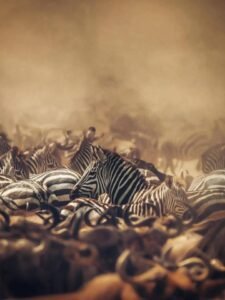
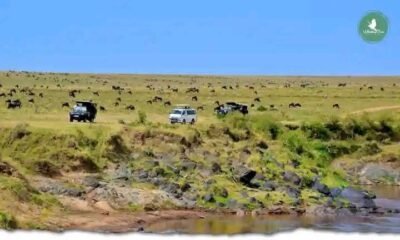
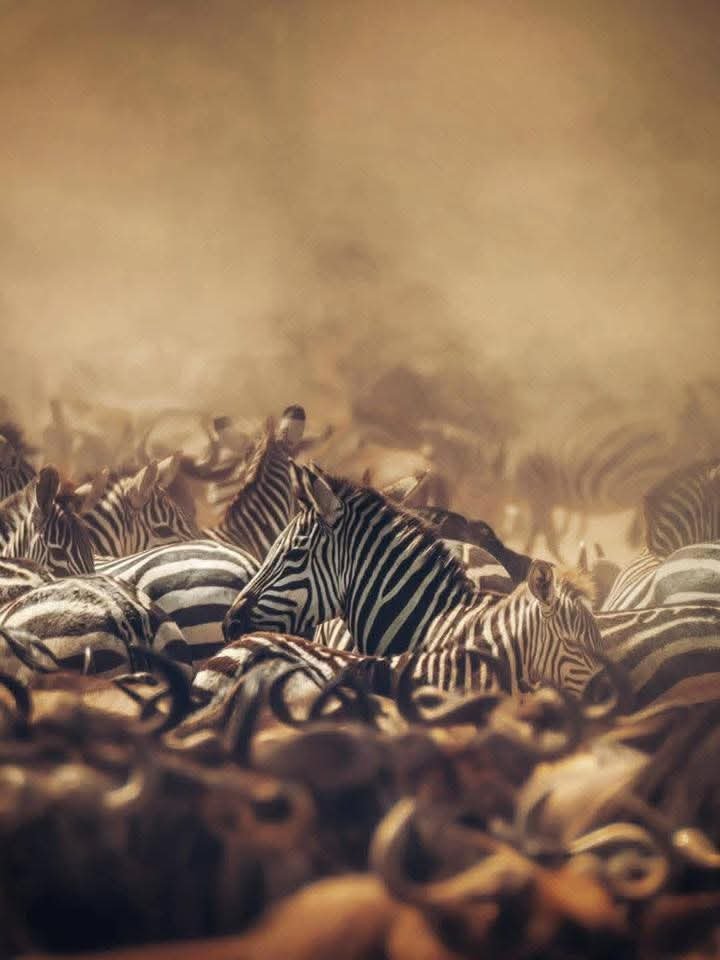
Lines of wildebeest appear first across the horizon. Then more. Then thousands more. Shapes stretching endlessly across the grasslands until individual animals become impossible to count.
They move with urgency but not panic. Instinct but not certainty.
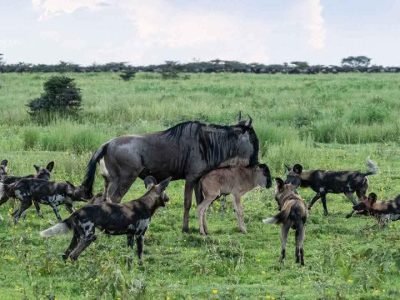
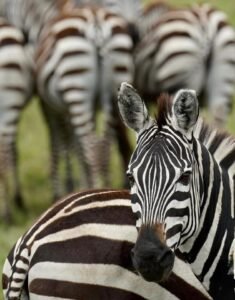
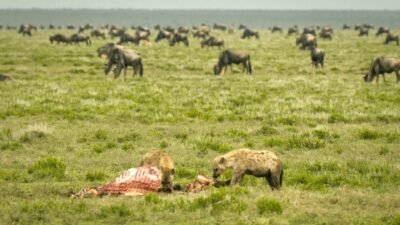
Calves stumble beside mothers. Zebras weave through the herds. Dust rises into the orange sunrise while hyenas linger at the edges waiting for weakness. Somewhere nearby, lions are already awake.
This is the Great Migration.
Not a performance.
Not a single event.
Not a documentary moment carefully scheduled for visitors.
It is a living rhythm older than borders, roads, and safari camps themselves.
And in 2026, it remains one of the most emotionally overwhelming wildlife experiences left on Earth.
Not because it is dramatic every second.
But because it feels endless.
What the Great Migration Really Is
Many people imagine the migration as one giant river crossing.
But the truth is much larger and more fascinating.
The Great Migration is a year-round circular movement involving:
- Over 1.5 million wildebeest
- Hundreds of thousands of zebras
- Gazelles
- Predators following closely behind
Together they move through the ecosystems of:
- Serengeti National Park
- Ngorongoro Conservation Area
- Masai Mara National Reserve
The migration follows rain.
Grass growth.
Water availability.
Ancient instinct.
Nothing controls it completely.
Not guides.
Not camps.
Not travellers.
That unpredictability is part of what makes the experience feel real.
The First Time You See the Herds
The scale is difficult to understand until you stand inside it.
Photographs flatten the experience.
In reality, migration herds stretch far beyond human vision. You drive for twenty minutes beside moving animals and still cannot see where the line begins or ends.
The sound becomes constant.
Grunting.
Hooves.
Dust shifting in wind.
And slowly, something strange happens psychologically.
You stop seeing individual animals and start feeling movement itself.
Like weather.
Like a living current flowing across East Africa.
Even experienced safari travellers become quiet during these moments.
Because the migration does not simply look impressive.
It feels ancient.
Why the Migration Happens
The migration exists because survival demands movement.
When rains fall across southern Serengeti plains, fresh nutrient-rich grass appears. Wildebeest gather there to feed and give birth. As seasons shift and grass disappears, the herds move north and west searching for water and new grazing.
Predators follow closely.
Lions know the migration routes.
Hyenas shadow calving grounds.
Crocodiles wait at river crossings.
Leopards watch woodland edges.
Every movement creates opportunity and danger simultaneously.
And unlike carefully scripted wildlife documentaries, there are long quiet periods between dramatic moments.
That is real safari.
Hours of searching.
Dusty roads.
Changing weather.
Patient observation.
Then suddenly:
Everything happens at once.
Calving Season: The Beginning of New Life
From roughly January through March, the southern plains of the Serengeti transform into one of nature’s great nurseries.
This is calving season.
Hundreds of thousands of wildebeest gather near areas like:
- Ndutu
- Southern Serengeti National Park
The landscape becomes intensely alive.
Newborn calves appear constantly. Some are still wet from birth while others wobble uncertainly beside exhausted mothers only minutes later.
And they must learn quickly.
Very quickly.
Because predators know this season too.
Lions patrol the grasslands.
Cheetahs watch isolated mothers.
Hyenas move restlessly after dark.
Yet despite the danger, calving season feels strangely hopeful.
The plains become green after seasonal rains. Storm clouds build dramatically overhead. Flaming sunsets wash across endless herds stretching toward the horizon.
For photographers and travellers seeking emotional depth rather than only predator action, this period can be extraordinary.
River Crossings: Chaos and Courage
When people imagine the Great Migration, they usually picture river crossings.
And yes — they are astonishing.
Especially crossings along:
- Mara River
- Grumeti River
But crossings are not constant action.
This surprises many first-time visitors.
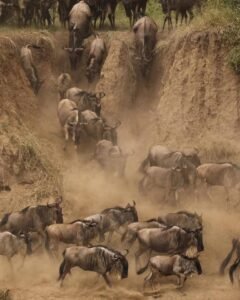
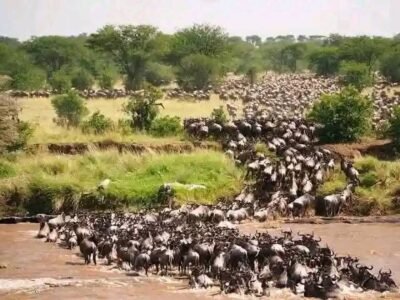
A herd may stand near a riverbank for hours. Sometimes an entire day. Animals gather nervously, shifting back and forth while crocodiles wait below in muddy water.
The tension becomes unbearable.
Then suddenly one wildebeest jumps.
And everything explodes.
Dust.
Noise.
Water.
Panic.
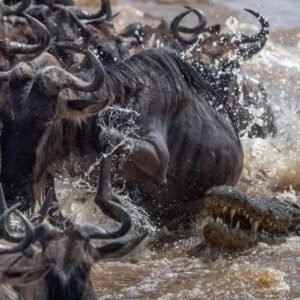
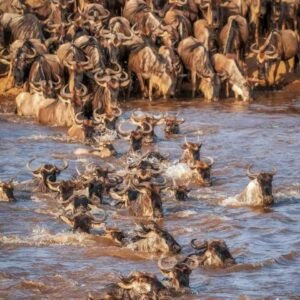
Thousands surge forward together while zebras kick through currents and crocodiles launch upward in violent bursts of water.
Some crossings last minutes.
But travellers remember them for decades.
What River Crossings Actually Feel Like
The emotional atmosphere during a crossing is difficult to describe accurately.
There is excitement, of course.
But also discomfort.
Because this is not a staged spectacle.
Animals get injured.
Some drown.
Predators kill.
Nature here feels raw and unscripted.
Guides often become quiet during crossings because even after years in the bush, the intensity remains powerful.
And strangely, many travellers later say the most unforgettable part was not the violence.
It was the hesitation beforehand.
Watching thousands of animals gather at the river edge while no one knows when the first leap will happen.
That tension becomes almost physical.
The Serengeti: Heart of the Migration
Serengeti National Park is not merely a backdrop for the migration.
It is the migration’s heartbeat.
The ecosystem is vast enough to allow natural movement on an enormous scale. Open plains stretch beyond the horizon while kopjes — ancient granite outcrops — rise unexpectedly from the grasslands like islands.
Every region of the Serengeti offers a different migration atmosphere:
| Region | Migration Season | Atmosphere |
|---|---|---|
| Southern Serengeti | Calving season | Green, dramatic, predator-rich |
| Central Serengeti | Year-round movement | Balanced and classic safari |
| Western Corridor | Grumeti crossings | Dense riverine tension |
| Northern Serengeti | Mara River crossings | Remote and cinematic |
This shifting geography means there is never one single “best” migration experience.
Only different chapters.
The Smell of the Migration
Few articles mention this.
But experienced safari travellers know the migration has a smell.
Dry grass.
Dust.
Animals.
Rain approaching.
During massive herd movements, the scent becomes part of the atmosphere itself. Vehicles drive through drifting clouds of earth while thousands of hooves churn the plains into fine powder.
After rain, the smell changes instantly.
Fresh grass rises sharply through the air while the herds spread across newly green landscapes almost overnight.
The migration engages every sense.
Predators Following the Herds
Where the migration moves, predators thrive.
For lions especially, the herds provide extraordinary hunting opportunities. Some prides position themselves strategically near migration routes while cheetahs use open plains for high-speed pursuits.
Hyenas follow almost constantly.
At night their calls echo across camps while wildebeest continue grunting endlessly in the darkness beyond.
And then there are crocodiles.
Old. Scarred. Motionless.
Waiting months for crossings to begin.
The predator-prey relationship during migration season reveals safari in its most honest form.
Not cruel.
Not sentimental.
Simply alive.
Nights During Migration Safari
The nights feel different when migration herds surround camp.
You hear them constantly.
Thousands of wildebeest grunting through darkness while unseen animals move past tents beneath moonlight. Sometimes zebras bark sharply nearby. Hyenas answer in the distance.
Sleep becomes strangely immersive.
You never fully forget where you are.
And around campfires, conversations shift.
People speak more quietly after witnessing migration days. The scale of the experience affects travellers emotionally in unexpected ways.
Not through adrenaline alone.
But through perspective.
Balloon Safaris Above the Migration
One of the most extraordinary ways to experience the migration is from above.
At dawn, hot air balloons rise silently over the Serengeti while sunlight spreads slowly across the plains beneath.
From the air, migration patterns become visible in ways impossible from the ground:
- Endless animal lines
- Predator movement
- Dust trails across valleys
- River systems guiding herds
And because balloons drift quietly, wildlife often remains calm below.
Elephants continue feeding.
Giraffes look upward briefly.
Wildebeest keep moving in dark flowing lines through golden grass.
It feels less like sightseeing and more like floating inside a living ecosystem.
The Unexpected Beauty Between the Drama
Many travellers arrive expecting nonstop action.
But migration safari also contains immense quiet beauty.
Long drives through empty-looking plains suddenly interrupted by distant herd movement. Sunsets washing copper light across thousands of animals. Storms building silently over acacia trees.
Sometimes the most memorable moments are not crossings or hunts.
Sometimes they are:
A lone wildebeest calf calling for its mother at dusk.
Dust glowing red behind zebras at sunrise.
The sound of rain approaching across open grasslands.
Safari memories rarely follow predictable logic.
Green Season Migration Safaris
The green season is one of East Africa’s most underrated safari experiences.
During this period:
- Landscapes become lush
- Crowds thin out
- Predator activity remains excellent
- Photography becomes spectacular
- Calving season begins
Storms transform the atmosphere dramatically.
Cloud shadows move across endless plains while shafts of sunlight break through in sudden bursts. The Serengeti feels more emotional somehow during green months.
More alive.
And for travellers seeking immersion rather than only famous river crossing photographs, this season can be deeply rewarding.
The Guides Who Read the Movement
Great migration guides do not simply drive randomly looking for animals.
They read the ecosystem.
Fresh tracks.
Recent rainfall.
Bird behaviour.
Predator movement.
Radio updates from other guides.
But even the best guides cannot fully predict migration timing.
That uncertainty keeps safari authentic.
The bush remains in control.
And experienced travellers eventually understand that unpredictability is not inconvenience.
It is the point.
Suggested Migration Safari Seasons for 2026
| Months | Region | Experience |
|---|---|---|
| January – March | Southern Serengeti & Ndutu | Calving season |
| April – June | Central & Western Serengeti | Herd movement and river build-up |
| July – October | Northern Serengeti | Mara River crossings |
| November – December | Central & Southern Serengeti | Return movement and green season |
The migration never truly stops.
It only changes shape.
Why the Migration Feels Emotional
People often expect safari to feel exciting.
They are less prepared for it to feel emotional.
But the migration affects many travellers deeply because it reveals something modern life often hides:
That humans are not separate from nature’s rhythms.
Standing beside thousands of moving animals beneath an open African sky creates perspective difficult to find elsewhere.
Deadlines disappear.
Phones feel irrelevant.
Time stretches differently.
You begin thinking less about schedules and more about light, weather, movement, and instinct.
The migration reconnects people to something older than routine.
Combining Migration Safari With Other Tanzania Experiences
Many travellers pair migration safari with:
This combination creates emotional contrast.
Migration brings movement, intensity, and scale.
Tarangire offers atmosphere and elephants.
Ngorongoro concentrates wildlife dramatically.
Zanzibar slows everything down beside the Indian Ocean afterward.
Together they create one of Africa’s most complete journeys.
Field Notes From Experienced Migration Guides
“People think crossings happen every hour. Sometimes the waiting becomes the real experience.”
“The migration teaches patience better than any classroom.”
“Every season feels completely different.”
“Even after years guiding here, some mornings still feel unreal.”
Responsible Migration Tourism in 2026
The popularity of migration safaris continues growing globally.
That makes responsible guiding increasingly important.
Good safari practice means:
- Respecting wildlife space
- Avoiding aggressive vehicle positioning
- Supporting conservation
- Working with experienced local guides
- Understanding that nature is unpredictable
The best migration experiences feel respectful rather than rushed.
Not every sighting should become a competition.
Packing for a Great Migration Safari
Essential Items
- Neutral safari clothing
- Warm layers for early mornings
- Binoculars
- Camera with zoom lens
- Dust protection for electronics
- Sunscreen
- Hat
Often Forgotten
- Spare memory cards
- Lightweight gloves for cold dawn drives
- Notebook for observations
- Rain jacket during green season
And perhaps most importantly:
Patience.
The migration rewards travellers who allow the bush to unfold naturally.
Final Reflections: Why People Dream About Returning
Long after travellers leave Tanzania, the migration returns unexpectedly in memory.
Sometimes through sound.
A distant rumbling that reminds them of hooves moving before sunrise.
Sometimes through light.
Golden dust drifting behind endless herds at sunset.
Or through silence.
The strange silence inside a safari vehicle while everyone watches thousands of animals gather nervously beside a riverbank waiting for one wildebeest to make the first impossible leap.
The Great Migration stays with people because it feels larger than tourism.
Larger than photography.
It feels like witnessing the Earth still functioning according to ancient instinct despite everything modern life tries to impose upon it.
And in 2026, that feeling may matter more than ever.
For travellers willing to slow down, listen carefully, and move with the rhythm of the Serengeti itself, the wildebeest migration remains one of the last truly overwhelming wildlife experiences left in the natural world.
Not polished.
Not predictable.
Not controlled.
Wild. Book now your unforgetable safari.