Lake Manyara National Park 2026: Tanzania’s Most Unexpected Safari

Lake Manyara National Park 2026: Tanzania’s Most Unexpected Safari
There are parks in Tanzania that announce themselves loudly.
The endless plains of the Serengeti.
The vast bowl of the Ngorongoro Crater.
The elephant kingdoms of Tarangire.
And then there is Lake Manyara National Park.
A park that arrives quietly.
You descend the Rift Valley escarpment early in the morning, mist still hanging over the forest canopy, and at first it feels almost secretive. The road curls through thick green groundwater forest where baboons sit in the middle of the track like old village elders. Hornbills hop between branches overhead. Somewhere deeper inside the trees, elephants move invisibly through the undergrowth, snapping branches with slow deliberate force.
Then suddenly the forest opens.
Light explodes across the soda lake.
Pink flamingos shimmer in the distance.
Buffalo gather near the shoreline.
And beyond it all, the Great Rift Valley rises like a wall against the horizon.
Lake Manyara is not Tanzania’s largest park.
It is not the most famous.
But for many travellers, it becomes one of the most memorable.
Because this is not a safari built only on scale.
It is built on atmosphere.
On the sound of rain falling through mahogany trees.
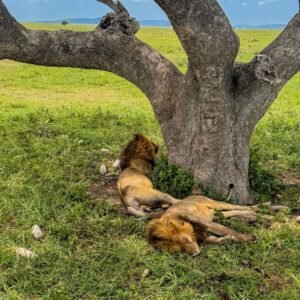
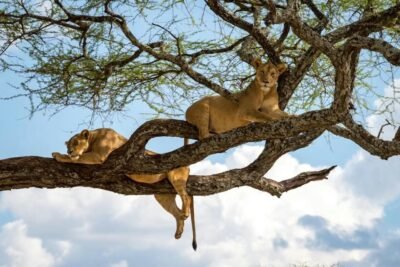
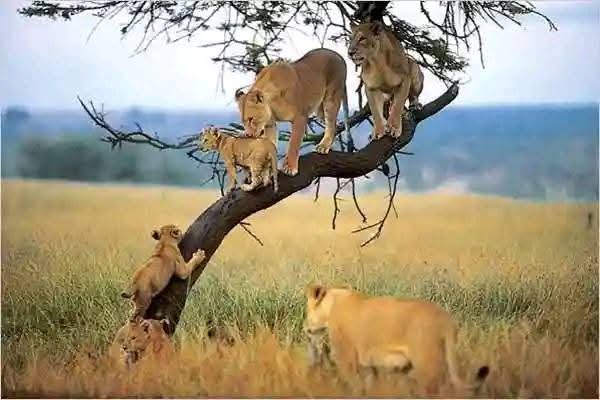
On lions sleeping in acacias above the road.
On the smell of wet earth after afternoon storms.
On the sudden silence when a leopard appears at dusk.
In 2026, as more travellers search for safari experiences that feel immersive rather than rushed, Manyara is becoming important again. Not as a stop between larger parks. But as a destination with its own rhythm, personality, and emotional weight.
This is the Lake Manyara most visitors do not expect.
Where Is Lake Manyara National Park?
Lake Manyara National Park sits in northern Tanzania, along the famous safari circuit that connects:
- Tarangire National Park
- Ngorongoro Conservation Area
- Serengeti National Park
From Arusha, the drive takes roughly two to three hours depending on road conditions and wildlife activity near the entrance gates.
But the approach matters.
You leave the busy safari departure city behind and begin climbing through Maasai country. Villages appear beside the road. Cattle move slowly through red dust. Children wave from bicycles. Then the Rift Valley escarpment emerges ahead — immense, ancient, dramatic.
By the time you descend toward Manyara, it already feels like the safari has begun.
Why Lake Manyara Feels Different
Many parks in East Africa are open landscapes.
Manyara is layered.
It changes constantly.
One hour you are driving beneath dense jungle-like canopy where blue monkeys leap through fig trees. The next, you are crossing open floodplains crowded with wildebeest and zebra. A few kilometres later you are beside the lake itself, where thousands of birds gather in shimmering heat haze.
Few parks in Tanzania compress so many ecosystems into such a compact space.
Inside one day you may encounter:
| Habitat | What It Feels Like | Common Wildlife |
|---|---|---|
| Groundwater forest | Cool, shaded, almost tropical | Elephants, monkeys, bushbuck |
| Acacia woodland | Dry and golden | Giraffes, lions, impala |
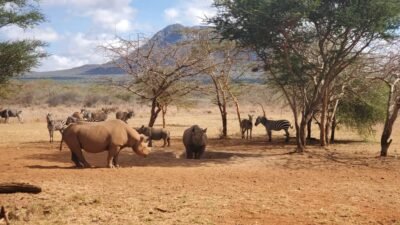
| Open floodplain | Expansive and bright | Buffalo, zebra, wildebeest |
| Soda lake shoreline | Reflective and surreal | Flamingos, pelicans, storks |
| Hot spring region | Remote and wild | Hippos, birds, predators |
That constant transition changes the mood of the safari.
Manyara keeps surprising people.
The First Morning Game Drive
The best safaris begin before sunrise.
You leave camp while the air is still cold enough for jackets. Guides speak quietly. Headlights cut through dust drifting across the road. Somewhere nearby, hyenas are finishing the night shift.
At the entrance gate, baboons already wait in the trees.
Not one or two.
Hundreds.
Large males patrol the roadside while tiny babies cling beneath their mothers. They barely move for vehicles anymore. Many travellers laugh the first time they see them. Others simply stare.
Then the forest swallows the road.
This is the moment Manyara reveals itself.
Sunlight filters through giant trees in narrow shafts. Forest elephants move silently between trunks. You may smell them before seeing them — a mixture of earth, leaves, and musk carried on damp morning air.
And unlike the open Serengeti, sightings here often feel sudden.
Intimate.
A leopard can appear without warning.
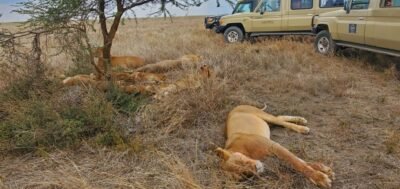
A lion may be sleeping directly above your vehicle.
An elephant might emerge from thick vegetation only metres away.
That unpredictability is part of the magic.
The Famous Tree-Climbing Lions
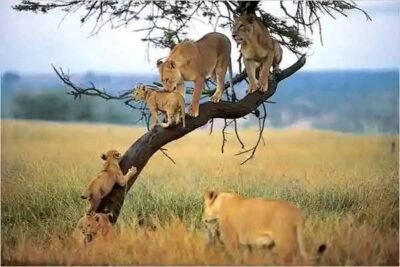
Lake Manyara became internationally famous because of its tree-climbing lions.
And yes — they are real.
Though not guaranteed.
Even experienced guides sometimes spend days searching without success. Then suddenly, during the heat of the afternoon, someone spots a tail hanging from an acacia branch.
You stop.
Engines go quiet.
There they are.
Massive lions stretched across tree limbs like oversized house cats, paws dangling lazily while vultures circle overhead and buffalo move beneath them.
Scientists still debate exactly why these lions climb trees here. Some believe it helps them escape insects and heat. Others think it provides better visibility across the floodplains.
Local guides often smile at those explanations.
“Sometimes lions just do strange things,” one old ranger once said beside the lake.
And honestly, that answer feels closest to safari truth.
Wild animals rarely behave according to neat expectations.
That uncertainty is why people keep coming back.
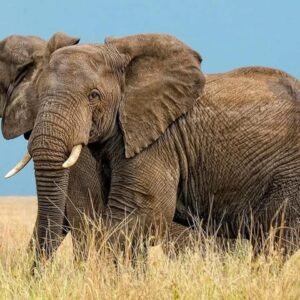
Elephants of the Forest
Many travellers associate elephants with open savannah.
But the elephants of Manyara feel different.
Here they move through forest shadows.
Quietly.
You may only notice them because branches crack somewhere ahead. Then an enormous grey shape appears between the trees, followed by another, and another.
Families pass slowly across the road. Calves stay protected in the middle. Older females pause to study vehicles carefully before continuing into the vegetation.
There is often a calmness to these encounters.
No rush.
No performance.
Just coexistence for a brief moment.
Many guides in northern Tanzania quietly say that Manyara offers some of the most beautiful elephant viewing in the country because the forest creates intimacy impossible on wider plains.
And when morning light filters through dust around a herd moving beneath giant trees, it is hard to disagree.
Birdlife That Changes the Entire Landscape
Even travellers who do not consider themselves bird enthusiasts often become fascinated in Manyara.
Because birds here are not background detail.
They define the atmosphere.
The lake itself acts like a giant mirror, drawing thousands of birds into the alkaline shallows:
- Flamingos
- Pelicans
- Yellow-billed storks
- Herons
- Spoonbills
- Cormorants
- Fish eagles
- Kingfishers
During peak conditions, flamingos gather in huge pink concentrations that seem to blur the edge between water and sky.
But birdlife is not limited to the lake.
The forests echo with hornbills and turacos. Eagles ride thermal currents above the escarpment. At night, owls call from camp while nightjars skim silently across roads.
For photographers, Manyara can become addictive.
Light changes constantly here. Reflections shift by the minute. Storm clouds rolling over the Rift Valley create dramatic skies that transform ordinary wildlife scenes into cinematic moments.
The Hippo Pools
There is a certain stillness around hippo pools in East Africa.
Not silence exactly.
More like suspended tension.
At Lake Manyara Hippo Pool, hippos crowd together in muddy water while oxpeckers move across their backs. Occasionally one opens its mouth in a display so large it seems anatomically impossible.
Then everything settles again.
Guides often stop here longer than expected because the atmosphere changes throughout the day.
Early morning feels cool and peaceful.
Midday becomes louder and harsher.
Evening brings golden light and growing movement as hippos prepare to leave the water for grazing.
And somewhere nearby, predators are always aware of that movement.
Safari is full of invisible relationships.
The Great Rift Valley Escarpment
One of the defining features of Manyara is the escarpment itself.
The Great Rift Valley rises dramatically along the western edge of the park, creating cliffs that dominate the landscape.
At certain viewpoints, especially near sunset, the scale becomes overwhelming.
Cloud shadows move slowly across the valley floor.
The lake changes colour from silver to blue to copper.
Flamingos form pale lines against distant water.
And tiny safari vehicles move like insects far below.
Many travellers arrive expecting animals.
They leave remembering light.
What Safari Feels Like Here in 2026
Safari travel is changing.
Travellers in 2026 are increasingly looking for experiences that feel slower, more connected, and less crowded. Many people no longer want to simply collect sightings.
They want atmosphere.
Texture.
Memory.
Lake Manyara fits that shift naturally.
This is a park where:
- You can still feel alone in parts of the forest
- Guides often know individual elephant families
- Bird calls dominate entire mornings
- Landscapes matter as much as wildlife
- Short game drives can still feel emotionally rich
Manyara also works beautifully for travellers combining multiple safari regions because it introduces East Africa gradually rather than overwhelming people immediately with endless plains and constant predator action.
It teaches travellers how to observe.
That matters more than most realise.
Best Time to Visit Lake Manyara National Park
January to March
Green season begins beautifully here.
The forest becomes lush. Birdlife explodes. Many animals give birth during this period, attracting predators while also creating incredible photographic opportunities.
Afternoon rainstorms are common but often brief.
This is one of the most atmospheric periods in Manyara.
June to October
Dry season brings excellent wildlife visibility.
Animals gather more predictably around water sources and roads become easier to navigate. Days are sunny and cool, especially in the mornings.
This is peak safari season across northern Tanzania.
November to December
Short rains return.
The landscape softens again. Migratory birds arrive. Skies become dramatic, with huge cloud formations rolling across the Rift Valley.
For travellers who enjoy mood, photography, and fewer vehicles, this period can be exceptional.
Wildlife Checklist: What You May See
Lake Manyara is not about ticking boxes.
Still, wildlife diversity here surprises many visitors.
Common Sightings
- Elephants
- Buffalo
- Giraffes
- Zebras
- Wildebeest
- Hippos
- Baboons
- Blue monkeys
- Warthogs
- Impalas
Predators
- Lions
- Leopards
- Hyenas
- Jackals
Birdlife
Over 400 bird species have been recorded around the park ecosystem.
Canoeing on Lake Manyara
One of the quieter experiences available seasonally is canoeing along the lake edge when water levels allow.
This changes perspective completely.
Instead of observing the lake from a vehicle, you move silently across the water itself while flamingos lift into the air around you and giraffes feed along distant shorelines.
There are moments during these excursions when engines disappear entirely.
Only paddles.
Wind.
Bird calls.
In modern travel, silence has become rare enough to feel luxurious.
Night Game Drives
Unlike many national parks in Tanzania, Lake Manyara offers night game drives in designated areas.
This reveals an entirely different world.
Genets slip across the road like shadows.
Bush babies leap through trees.
Porcupines wander through grasslands.
Lions become more vocal after dark.
And the forest — already mysterious during daylight — feels ancient at night.
For travellers who have only experienced daytime safari, Manyara after sunset can be unforgettable.
Treetop Walkway Experience
The treetop walkway offers a different relationship with the forest.
Suspended bridges carry visitors above the canopy where butterflies drift through filtered sunlight and hornbills move at eye level through the trees.
Some travellers initially hesitate on the swaying bridges.
Then they stop worrying.
Because the view becomes too absorbing.
From above, the forest feels endless.
Cultural Encounters Around Lake Manyara
Safari does not exist separately from people here.
Around Manyara, daily life continues through farming villages, Maasai communities, local markets, and roadside towns where safari vehicles pass alongside bicycles carrying bananas or firewood.
The nearby town of Mto wa Mbu is especially interesting because of its extraordinary cultural diversity. More than 100 ethnic groups are represented in the area.
Walking through local farms or markets with knowledgeable local guides can become one of the most grounding experiences of the journey.
Because East Africa is not only wildlife.
It is also human rhythm.
A Typical Safari Day in Lake Manyara
5:30 AM — Coffee Before Sunrise
Camp staff move quietly between tents while distant hyenas call in the dark.
6:15 AM — Entering the Park
Mist hangs beneath giant trees. Baboons gather beside the road.
8:00 AM — Elephant Encounter
Fresh tracks lead into forest shadows where a herd appears unexpectedly.
11:30 AM — Lake Shoreline
Flamingos shimmer in heat haze while fish eagles call overhead.
1:00 PM — Lunch Stop
Acacia shade. Dusty boots. Cold drinks. Stories about the morning sightings.
3:45 PM — Tree-Climbing Lions
A guide spots movement in branches above the track.
Everything stops.
6:30 PM — Sunset at Camp
The escarpment glows orange while distant thunder rolls across the valley.
9:00 PM — Campfire Conversations
People speak more softly after safari days.
The wild changes the rhythm of conversation.
Photography in Lake Manyara
For photographers, Manyara rewards patience.
Unlike the Serengeti where dramatic predator action may unfold openly, Manyara often offers moodier, more intimate scenes:
- Elephants emerging through forest mist
- Lions hidden in branches
- Flamingos reflected on shallow water
- Rainstorms approaching across the Rift Valley
- Monkeys lit by shafts of sunlight
Wide-angle photography works beautifully here because landscapes are such an important part of the story.
And during green season, the colours become extraordinary.
Comparing Lake Manyara to Other Northern Parks
| Park | Known For | Atmosphere |
|---|---|---|
| Serengeti National Park | Endless plains & migration | Vast and cinematic |
| Ngorongoro Crater | Dense wildlife concentration | Dramatic and intense |
| Tarangire National Park | Elephant herds & baobabs | Wild and spacious |
| Lake Manyara National Park | Forest, atmosphere & diversity | Intimate and unpredictable |
Many experienced guides recommend Manyara especially for travellers who appreciate subtle safari moments rather than only major predator sightings.
Where to Stay Around Lake Manyara
Accommodation styles vary significantly around Manyara.
Luxury Lodges
Clifftop lodges overlooking the Rift Valley offer extraordinary sunset views and refined safari comfort.
Tented Camps
Canvas camps closer to nature allow guests to hear wildlife throughout the night.
Mid-Range Safari Lodges
Comfortable, well-positioned options ideal for travellers combining multiple parks.
Community-Based Stays
Smaller properties connected to local communities offer more personal cultural interaction.
The best choice depends less on luxury level and more on what kind of safari rhythm you want.
What Many Travellers Misunderstand About Safari
Many first-time visitors arrive expecting constant action.
Predators every hour.
Perfect sightings.
Nature performing on command.
Then Manyara teaches something important.
Safari is observation.
Waiting matters. Silence matters. Even absence matters.
Sometimes the most memorable moment is not a lion hunt.
It is standing quietly while elephants feed in morning fog and nobody in the vehicle speaks for several minutes because the scene feels too complete to interrupt.
That is the kind of memory Manyara creates.
Family Safaris in Lake Manyara
Manyara works exceptionally well for families because:
- Drive times inside the park are manageable
- Wildlife appears quickly and frequently
- Monkey and baboon activity keeps children engaged
- Canoeing and canopy walks add variety
- Landscapes change constantly
The diversity helps younger travellers stay curious throughout the day.
And for parents, that matters.
Safari and Conservation in 2026
Like much of East Africa, Manyara exists within larger conservation pressures involving climate, tourism growth, land use, and wildlife movement corridors.
Yet there is also resilience here.
Local guides, rangers, researchers, and surrounding communities remain deeply connected to the ecosystem. Conservation is not abstract in Tanzania.
It is practical. Daily. Personal.
You feel that when speaking with guides who have watched elephant families for years or trackers who recognise individual lions by scars and behaviour.
Safari becomes more meaningful when travellers understand that these landscapes survive because people continue protecting them.
Packing for Lake Manyara
Essential Items
- Neutral-coloured clothing
- Light jacket for mornings
- Binoculars
- Camera with dust protection
- Sunscreen
- Hat
- Comfortable walking shoes
Often Forgotten
- Extra memory cards
- Power bank
- Lightweight rain layer
- Small flashlight
- Lip balm during dry season
And always:
Patience.
No safari item matters more.
Suggested Northern Tanzania Safari Combination
Manyara works beautifully as part of a larger northern circuit itinerary.
A classic route may include:
- Tarangire National Park
- Lake Manyara National Park
- Ngorongoro Conservation Area
- Serengeti National Park
Each park feels distinct from the others, creating emotional variety across the journey.
That contrast is important.
Too many similar landscapes in succession can flatten the experience.
Manyara refreshes it.
Field Notes From Local Guides
“People come looking for lions. Then they leave talking about the forest.”
“Manyara teaches travellers to slow down.”
“When the lake is full and flamingos arrive, even guides stop and stare.”
“No two days here feel the same.”
Is Lake Manyara Worth Visiting in 2026?
Absolutely.
But perhaps not for the reasons people expect.
If you want only huge predator drama every hour, other parks may dominate headlines more easily.
But if you want:
- atmosphere
- intimacy
- forest wildlife
- birdlife
- varied ecosystems
- emotional safari moments
- cinematic scenery
- quieter beauty
Then Lake Manyara can become one of the most rewarding parts of northern Tanzania.
Especially in 2026, when more travellers are rediscovering the value of slower, more immersive safari experiences.
Final Reflections: The Safari You Remember Later
Years after safari, people often remember strange details.
Not just the famous sightings.
They remember:
The smell of rain on dry earth.
The sound of flamingos lifting off the lake.
A lion sleeping in a tree branch above the road.
Dust glowing gold behind elephants at sunset.
Coffee beside a campfire before dawn.
Silence inside the forest.
Lake Manyara lives in those kinds of memories.
Quietly.
And perhaps that is exactly why it stays with people for so long.
For travellers exploring Tanzania in 2026, Lake Manyara National Park remains one of East Africa’s most atmospheric safari landscapes — not because it tries to overwhelm you, but because it allows you to feel present inside the wild.
And that feeling is becoming increasingly rare. Book now your safari 2026