Marangu Route Trek 2026: The Historic Path to the Roof of Africa

Marangu Route Trek 2026: The Historic Path to the Roof of Africa
There is something strangely nostalgic about the Marangu Route.
Perhaps it is the mountain huts standing quietly beneath giant trees.
Perhaps it is the long history carried by the trail itself.
Or maybe it is the way the route rises steadily through rainforest, moorland, alpine desert, and ice as though guiding trekkers through different worlds layered upon the slopes of Mount Kilimanjaro.
The Marangu Route is often called the “Coca-Cola Route.”
The nickname sounds casual. Almost playful.
But the mountain itself is not casual.
Not at all.
Because regardless of the route, Kilimanjaro remains a serious journey into altitude, exhaustion, silence, and extraordinary beauty. And the Marangu Route — despite its reputation as the mountain’s most established trail — still carries the emotional unpredictability that makes Kilimanjaro unforgettable.
People arrive imagining a climb.
They leave remembering moments.
Cold air drifting through camp before dawn.
Rain tapping against hut roofs at night.
The sound of boots on volcanic gravel beneath stars.
The strange emotional stillness near the summit.
For trekkers planning a Kilimanjaro adventure in 2026, the Marangu Route remains one of Tanzania’s most historic and recognizable mountain experiences — a route where simplicity, rhythm, and tradition shape the journey upward.
Why the Marangu Route Is So Famous
The Marangu Route is the oldest established trekking route on Kilimanjaro.
For decades, climbers from around the world have followed this path toward the summit. Guides know every bend of the trail. Porters move across the mountain with practiced rhythm. Mountain huts stand where generations of trekkers have rested before continuing higher into thinner air.
Unlike most other Kilimanjaro routes that rely entirely on camping, Marangu uses mountain huts.
That changes the atmosphere completely.
Trekkers sleep inside shared wooden cabins rather than tents. Dining halls become gathering places where climbers from different countries sit together drinking tea while discussing the day’s climb, altitude headaches, weather forecasts, and summit hopes.
There is a communal feeling on the Marangu Route that feels different from the isolation of tented camps.
Especially during cold evenings high on the mountain.
The Eastern Side of Kilimanjaro
The Marangu Route approaches Kilimanjaro from the southeastern side of the mountain.
The journey begins near Marangu, a fertile area of coffee farms, banana plantations, waterfalls, and Chagga villages beneath the mountain slopes.
Life feels deeply connected to Kilimanjaro here.
The mountain dominates the horizon constantly.
Children walk beneath its shadow on their way to school. Farmers work rich volcanic soil while clouds gather around the summit far above. Guides and porters often grow up within sight of the peak itself.
Before climbers even begin trekking, Kilimanjaro already feels woven into everyday life.
Entering the Rainforest
The first section of the Marangu Route passes through dense rainforest.
And rainforest on Kilimanjaro feels alive in every direction.
Moisture drips from moss-covered branches. Giant ferns line muddy trails while blue monkeys disappear silently through the canopy overhead. Sunlight filters unevenly through thick forest creating shifting patterns across the path.
The air smells earthy and wet.
Bird calls echo through trees while trekkers begin adjusting mentally to mountain pace.
“Pole pole,” guides remind everyone gently.
Slowly slowly.
Those words become the rhythm of Kilimanjaro itself.
Fast climbers often struggle here because excitement hides the reality of altitude waiting higher above. Experienced guides understand that the mountain rewards patience far more than speed.
And so the Marangu Route begins quietly.
One careful step at a time beneath ancient forest.
Mandara Hut: The First Mountain Night
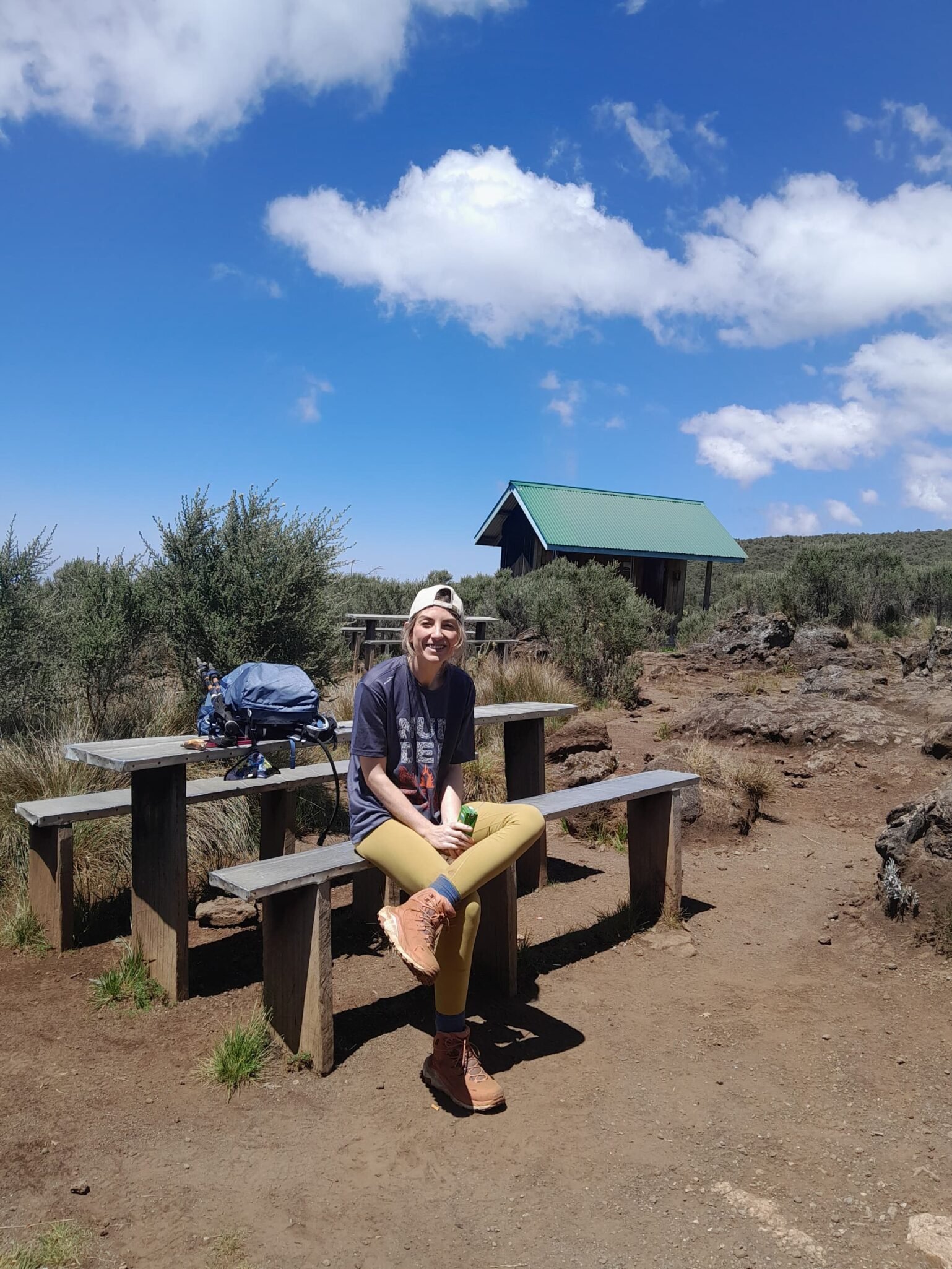
By afternoon, trekkers usually arrive at Mandara Hut.
The huts sit within forest clearings surrounded by towering trees and drifting mist. Porters move between cabins carrying supplies while climbers rest tired legs outside beneath cooling evening air.
The atmosphere feels calm.
Gentle.
People still laugh easily on the first day. Energy remains high. The summit feels distant and exciting rather than intimidating.
And at night, rainforest sounds surround the huts completely.
Wind through trees.
Distant rain.
Soft conversations fading into silence.
For many climbers, this becomes the first moment the outside world truly disappears.
The Transition Into Moorland


Leaving the forest behind changes the mountain dramatically.
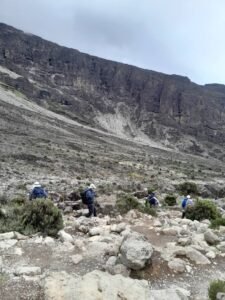
Trees begin thinning. Vegetation shrinks lower against the ground while giant groundsels and strange alpine plants appear across the landscape like survivors from another geological age.
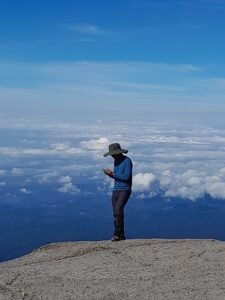
Clouds drift beneath the trail now rather than above it.
And for the first time, trekkers begin seeing the upper slopes of Kilimanjaro clearly.
The mountain suddenly feels enormous.
Not only high.
Vast.
The route toward Horombo Hut crosses open moorland where weather changes rapidly. One moment bright sunlight warms the trail. Minutes later cold mist sweeps across the mountain reducing visibility almost completely.
Kilimanjaro never feels predictable.
That uncertainty becomes part of its emotional power.
Horombo Hut: Life Above the Clouds
Horombo Hut sits in one of the most visually striking sections of the Marangu Route.
From here, trekkers often see both Mawenzi Peak and Kibo Peak rising across dramatic volcanic terrain while clouds stretch endlessly below the mountain.
The altitude becomes noticeable here.
Breathing deepens.
Sleep becomes lighter.
Headaches sometimes appear.
And the pace of camp life slows naturally.
Many itineraries include an additional acclimatization day at Horombo because proper altitude adjustment matters enormously on Kilimanjaro.
The body needs time.
No amount of determination can replace acclimatization.
Why the Marangu Route Is Considered Challenging in Its Own Way
The Marangu Route is often described as “easier” because of hut accommodation and a more gradual trail.
But this description can be misleading.
Kilimanjaro is never easy.
What makes Marangu challenging is its shorter acclimatization profile compared to longer routes like Lemosho Route.
Trekkers ascend and descend using the same trail, and altitude gains can feel rapid for some climbers.
That is why experienced mountain crews strongly recommend:
- slow pacing
- hydration
- proper acclimatization days
- listening carefully to guides
The summit depends less on physical strength than many people expect.
Altitude changes everything.
The Saddle: Kilimanjaro’s Harsh Open Wilderness
Above Horombo Hut, the mountain transforms again.
Vegetation disappears almost entirely.
The trail crosses the Saddle — a vast alpine desert stretching between Mawenzi and Kibo peaks. The landscape feels exposed, dry, and strangely silent. Wind moves across volcanic dust while sunlight reflects harshly from barren terrain.
Nothing grows easily here.
The mountain begins testing people emotionally in this zone.
Energy fades faster.
Simple walking feels harder.
Conversations grow quieter.
And finally, trekkers arrive at Kibo Hut beneath the looming summit cone.
This is where summit night begins.
Or more accurately:
Where anticipation begins.
Summit Night: Walking Through Darkness
Summit attempts usually begin around midnight.
The cold hits immediately outside the huts.
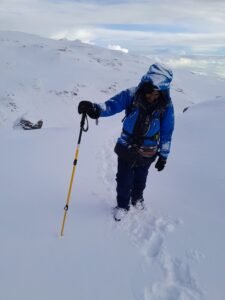
Headlamps flicker across dark volcanic slopes while climbers move upward slowly through freezing air. The world narrows to breathing, footsteps, and the small circle of light ahead.
This section demands patience more than power.
The trail climbs steadily toward Gilman’s Point across loose volcanic scree where every step feels heavy at altitude.
Some climbers grow emotional here.
Not dramatically.
Quietly.
Fatigue strips away distraction. The mountain becomes intensely personal during summit night.
Only effort remains.
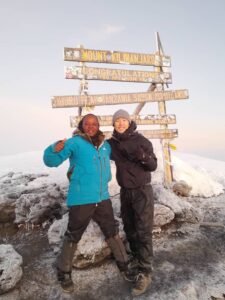
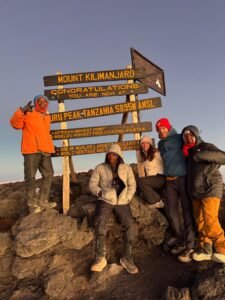
And somewhere above, hidden in darkness, waits Uhuru Peak.
Sunrise at Uhuru Peak
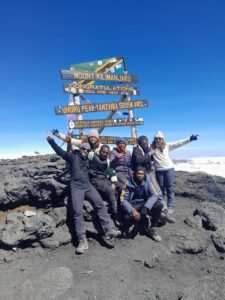
Few moments in East Africa compare to sunrise at Uhuru Peak.
The first light spreads slowly across glaciers while clouds glow far below the mountain. Ice cliffs catch orange sunlight against black volcanic rock. The horizon seems endless.
And exhaustion suddenly mixes with disbelief.
People stand silently for long moments.
Some cry quietly.
Some laugh.
Some simply stare across Africa beneath them.
Because reaching the summit feels larger than achievement alone.
It feels transformational.
Not because Kilimanjaro changes who people are overnight.
But because difficult journeys reveal things ordinary life often hides.
Descending Back Through the Mountain
Descending Kilimanjaro feels strangely emotional.
The body grows stronger with lower altitude while the mind struggles to process how quickly the experience passed. Within hours, climbers move from glaciers back toward warmer volcanic valleys.
And gradually:
Birdsong returns.
Vegetation reappears.
Air thickens with oxygen again.
The mountain begins releasing people back into ordinary life.
But something often stays behind.
Or perhaps something comes back changed.
The People Behind Every Kilimanjaro Trek
No Marangu Route experience exists without the Tanzanian mountain crews who guide, support, cook, and carry equipment across the mountain.
Porters are the quiet strength of Kilimanjaro.
Long before climbers wake, they are already preparing tea, organizing gear, and moving supplies uphill through difficult terrain. Guides monitor altitude symptoms constantly while balancing encouragement with safety decisions.
And many travellers leave the mountain deeply moved not only by Kilimanjaro itself, but by the warmth and resilience of the crews beside them.
The climb becomes shared effort.
Not individual conquest.
Comparing Marangu With Other Kilimanjaro Routes
| Route | Atmosphere | Accommodation | Difficulty |
|---|---|---|---|
| Marangu Route | Historic & social | Mountain huts | Moderate |
| Lemosho Route | Scenic & immersive | Camping | Moderate |
| Machame Route | Dramatic & popular | Camping | Moderate to challenging |
| Rongai Route | Quiet & remote | Camping | Moderate |
Each route reveals a different side of Kilimanjaro.
Marangu’s strength lies in its simplicity, accessibility, and long mountain history.
Best Time to Climb the Marangu Route in 2026
January to March
- Cooler temperatures
- Occasional snow near summit
- Fewer trekkers
- Dramatic mountain scenery
June to October
- Drier conditions
- Clearer summit visibility
- Popular trekking season
- Excellent photography weather
November to December
- Short rains possible
- Lush rainforest conditions
- Quieter trail atmosphere
Kilimanjaro changes with every season.
Clouds.
Light.
Temperature.
Mood.
No two climbs ever feel exactly alike.
Combining Kilimanjaro With Safari and Zanzibar
Many travellers continue after Kilimanjaro toward:
This combination creates one of Tanzania’s most extraordinary travel experiences:
Mountain.
Wildlife.
Coastline.
Together they reveal the emotional diversity of East Africa.
Field Notes From Kilimanjaro Guides
“The mountain teaches patience faster than anything else.”
“People think the summit is the goal. But the journey changes them more.”
“Marangu has history. You feel the generations of climbers on this trail.”
“The sunrise at Uhuru Peak stays inside people for years.”
What Climbers Often Remember Most
Interestingly, climbers rarely remember only the summit.
They remember fragments:
Rain against hut roofs at night.
Steam rising from morning tea.
Porters singing softly on the trail.
Cold summit wind before sunrise.
The silence above the clouds.
Kilimanjaro stays in memory through atmosphere as much as achievement.
Final Reflections: The Historic Road Into the Sky
The Marangu Route remains one of the most enduring paths up Mount Kilimanjaro for a reason.
Not because it is easy.
Not because it is famous.
But because it offers a deeply human mountain experience shaped by rhythm, simplicity, weather, altitude, and shared effort.
It is a route where strangers become teammates.
Where silence becomes meaningful.
Where exhaustion and wonder exist together.
And somewhere above all of it, beyond rainforest and volcanic desert, sunrise waits quietly over the Roof of Africa.
For trekkers planning Kilimanjaro in 2026, the Marangu Route remains more than a trail.
It remains a journey through changing landscapes, changing emotions, and the timeless wild presence of Tanzania’s greatest mountain. Book now your historic trek.