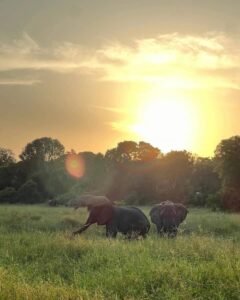
Great Migration Safari Packages 2026: Following the Endless Movement Across the Serengeti

Great Migration Safari Packages 2026: Following the Endless Movement Across the Serengeti
There are mornings in the Serengeti when the earth itself seems alive.
Not metaphorically.
Actually alive.
The plains move.
At first light, you hear it before you fully understand it. A distant rumbling carried through cold dawn air. Low. Continuous. Like approaching thunder somewhere beyond the horizon.
Then shapes begin emerging from the darkness.
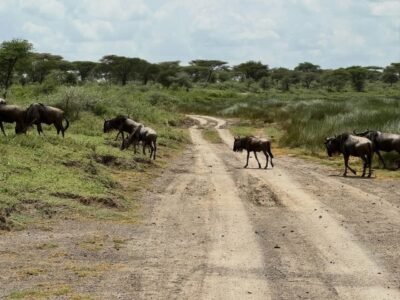
Lines of wildebeest.
Thousands at first.
Then tens of thousands.
Then suddenly the scale becomes impossible to measure.
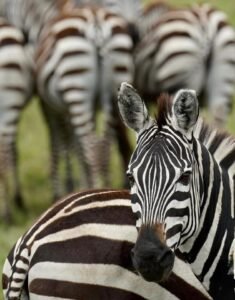
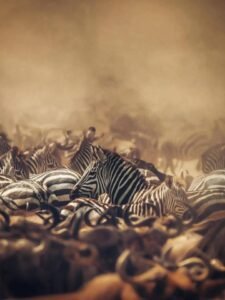
Animals stretching across the plains in every direction. Hooves kicking pale dust into golden sunrise light while zebras weave between them like black-and-white currents in a moving river.
And somewhere nearby, lions are already watching.
This is the Great Migration.
Not a performance.
Not a scheduled show.
Not a fenced wildlife experience created for visitors.
This is one of the last great natural movements left on Earth.
Wild. Unpredictable. Ancient.
And in 2026, travellers from around the world will once again come to Tanzania searching for it.
Not only to see animals.
But to feel something larger than themselves.
What Makes the Great Migration So Powerful?


The Great Migration is often described using numbers.
Nearly two million wildebeest.
Hundreds of thousands of zebras.
Thousands of gazelles.
But statistics fail to explain what actually happens emotionally when you witness it.
Because the migration is not only about size.
It is about movement.
Constant movement.
Animals searching endlessly for rain, grass, water, and survival across the vast ecosystems of northern Tanzania and Kenya.
Nothing stands still for long.
And that tension — the uncertainty of where the herds will move next — is what makes migration safari feel alive in a way many other wildlife experiences do not.
You are not visiting a static destination.
You are following a living rhythm.
Why Tanzania Remains the Heart of the Great Migration
Although the migration crosses into Kenya, the majority of this extraordinary cycle happens inside Tanzania.
Especially within the immense landscapes of Serengeti National Park.
This is where:
- calving season unfolds
- predators gather
- massive herds dominate the southern plains
- long migration columns stretch toward the north
- dramatic river crossings begin
Tanzania is not simply one stop within the migration.
It is the foundation of the entire story.
Understanding the Migration Cycle in 2026
The migration never truly stops.
It changes shape constantly.
Different seasons reveal completely different moods of the Serengeti.
January to March — Calving Season in the Southern Serengeti
This is one of the most emotional periods of the migration.
The southern Serengeti and Ndutu plains become filled with newborn life.
Everywhere you look:
tiny calves attempting their first steps,
protective mothers,
predators waiting patiently nearby.
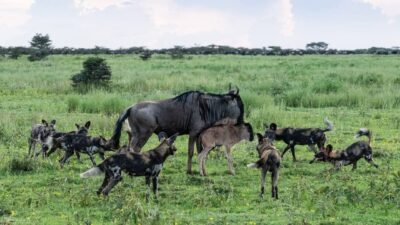
Nearly half a million wildebeest calves are born within a short period.
And because new life attracts danger, predator activity becomes extraordinary.
Cheetahs move low through grasslands.
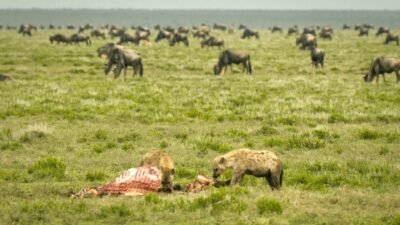
Hyenas patrol constantly.
Lions remain close to vulnerable herds.
The atmosphere feels tense but beautiful.
Fragile.
For photographers, this season often becomes unforgettable.
April to May — The Green Season Movement
The rains deepen the landscape.
Grass grows high.
Storm clouds roll dramatically across the plains.
The migration begins moving northwest slowly, following fresh grazing.
This season feels quieter.
More intimate.
Fewer vehicles.
Moodier skies.
Dramatic light.
For travellers who value atmosphere over crowds, these months can feel deeply rewarding.
June to July — The Western Corridor Crossings
As the dry season strengthens, the herds begin facing new obstacles.
Rivers.
The Grumeti crossings may not be as famous internationally as the Mara River, but they carry their own intensity.
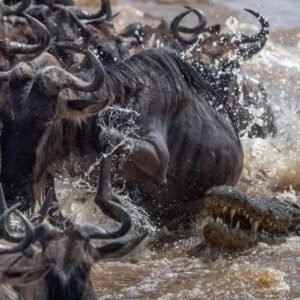
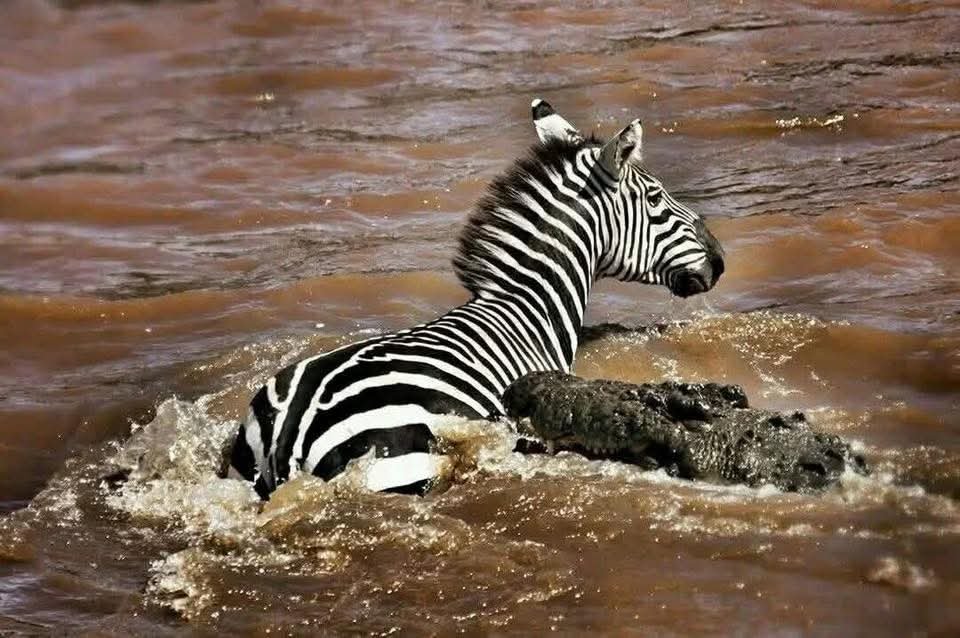
Crocodiles wait silently beneath dark water.
The herds hesitate.
Gather.
Scatter.
Then suddenly explode forward in panic and momentum.
Dust. Noise. Chaos.
Then silence again.
Safari guides often describe these moments as completely unpredictable.
You can wait hours beside a river with nothing happening.
Then within seconds, everything changes.
August to October — Mara River Crossing Season
This is the migration season most travellers imagine first.
The northern Serengeti becomes the stage for some of Africa’s most dramatic wildlife scenes.
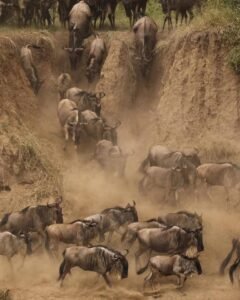
Massive herds gather nervously near steep riverbanks.
No one knows when they will cross.
Not the guides.
Not the travellers.
Not even the animals themselves.
That uncertainty becomes part of the emotional experience.
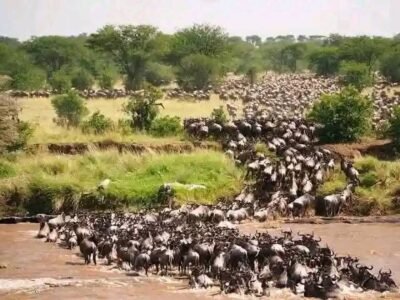
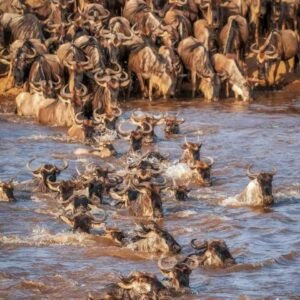
Then one wildebeest jumps.
And suddenly thousands follow.
Water erupts.
Animals scramble desperately against current and panic while crocodiles attack from below.
It is brutal sometimes.
But also honest.
The migration does not hide survival.
It reveals it openly.
November to December — The Return South
The short rains begin again.
The herds gradually drift back toward southern Serengeti grasslands.
This period feels transitional.
The enormous pressure of river crossings softens.
The plains open once again.
And slowly the migration cycle prepares to begin again.
Choosing the Right Great Migration Safari Package
Not every migration safari feels the same.
The experience changes enormously depending on:
- timing
- region
- accommodation
- guide quality
- vehicle positioning
- pacing of the itinerary
The best migration safaris are not rushed.
They allow time for waiting.
Because waiting is part of migration safari.
5-Day Great Migration Safari Package
Best For:
- shorter holidays
- first-time safari travellers
- focused migration experience
Common Route:
- Arusha
- Central Serengeti
- Northern Serengeti
- Ngorongoro Crater
This itinerary works well for travellers targeting river crossing season.
7-Day Great Migration Safari Package
Best For:
- deeper wildlife immersion
- photographers
- couples
- slower travel pace
This duration allows flexibility.
And flexibility matters enormously during migration season because the herds move unpredictably.
Extra days improve the chances of meaningful sightings.
10-Day Migration and Zanzibar Package
Some travellers combine migration safari with beaches in Zanzibar.
The emotional contrast becomes extraordinary.
After dusty game drives and predator-filled plains, the Indian Ocean feels surreal:
turquoise water,
palm trees,
warm coastal air.
Many honeymoon travellers choose this combination.
The Difference Between Central and Northern Serengeti
| Region | Best Season | Atmosphere |
|---|---|---|
| Central Serengeti | Year-round | Predator-rich, balanced wildlife |
| Northern Serengeti | Jul–Oct | River crossings, dramatic migration |
| Southern Serengeti | Jan–Mar | Calving season, open plains |
| Western Corridor | May–Jul | River crossings, quieter tourism |
Understanding these regions helps travellers avoid disappointment.
Migration is seasonal movement.
Not every part of Serengeti looks the same year-round.
Why Experienced Guides Matter During Migration Safari
A guide shapes everything.
Not only wildlife sightings.
But rhythm.
Positioning.
Patience.
Interpretation.
Experienced guides read:
- animal behavior
- dust movement
- bird alarms
- herd direction
- predator tension
Sometimes a guide notices tiny details long before action begins.
A distant line of nervous wildebeest.
Sudden silence from zebras.
Vultures circling low.
These signs matter.
Migration safari rewards observation.
The Emotional Reality of River Crossings
Many travellers imagine river crossings as constant dramatic action.
The reality is slower.
More uncertain.
And honestly, more powerful because of that uncertainty.
You may wait beside a river for hours.
Nothing happens.
The herds gather nervously near the edge.
They back away repeatedly.
Dust rises.
Tension builds.
Then suddenly:
movement.
The entire landscape erupts.
Those unpredictable moments create some of the strongest safari memories people ever experience.
For travellers visiting Tanzania between July and October, combining Mount Kilimanjaro with the Great Migration safari creates one of Africa’s most extraordinary travel experiences. You can explore river crossings, migration timing, and safari planning inside our detailed Great Migration Safari Guide 2026/2027.
Luxury Great Migration Safari Packages 2026
Luxury safari in Tanzania is not about excess.
At least not in the traditional sense.
True safari luxury often means:
- silence
- privacy
- exceptional guiding
- remote camp locations
- uninterrupted wilderness
Imagine:
returning from an evening game drive while lanterns glow softly around camp.
Hot water waiting.
Fresh coffee before dawn.
Hyenas calling beyond canvas walls at night.
Luxury here feels connected to atmosphere rather than decoration.
Budget and Mid-Range Migration Packages
Not every unforgettable safari must be ultra-luxury.
Many mid-range camps provide:
- excellent guiding
- comfortable tents
- authentic safari atmosphere
- outstanding wildlife access
The key is choosing strong operators and experienced local teams.
Guiding quality matters more than expensive furniture.
What Wildlife Can You Expect Beyond Wildebeest?
The migration attracts predators constantly.
Especially:
- lions
- cheetahs
- hyenas
- leopards
- crocodiles
But the ecosystem feels complete because of all the smaller moments too:
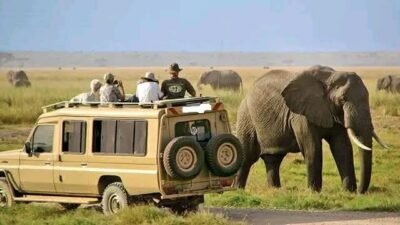
- elephants crossing roads silently
- giraffes moving through acacia trees
- jackals hunting near camp
- secretary birds stalking grasslands
The migration is not isolated from the Serengeti ecosystem.
It energizes the entire wilderness.
Field Guide Notes From the Serengeti
“The migration teaches patience. The plains decide everything.”
Experienced guides know there are no guarantees in safari.
That unpredictability is not a weakness.
It is the reason the experience still feels real.
Best Time to Book Great Migration Safari Packages 2026
High season availability disappears quickly.
Especially for:
- river crossing camps
- luxury lodges
- prime northern Serengeti locations
Many experienced travellers book:
- 8–14 months ahead for peak season
- 4–8 months ahead for green season travel
The earlier travellers secure safari logistics, the more flexibility they have.
Combining Migration Safari With Other Tanzania Experiences
Many visitors combine migration safari with:
This combination creates emotional variety:
wildlife,
culture,
mountains,
coastline,
adventure,
stillness.
The Silence People Remember Most
Strangely, many travellers do not remember only the crossings.
They remember quieter moments too.
A lone wildebeest calf calling for its mother at dusk.
Campfire smoke drifting into cold night air.
The sound of distant lions while stars fill the Serengeti sky.
Migration safari is not only spectacle.
It is atmosphere.
Final Reflections: Why the Great Migration Changes People
The Great Migration reminds people that wilderness still exists on a scale larger than humanity.
That movement older than roads, borders, and tourism continues across East Africa exactly as it has for generations.
And when travellers sit quietly beside those endless plains watching the herds disappear into distant dust, something shifts internally.
Life feels slower for a moment.
Clearer.
The noise of ordinary routines fades.
Only wind remains.
Hooves.
Grass.
Distance.
And perhaps that is why travellers return home speaking about the Serengeti differently from other destinations.
Because the migration does not feel staged.
It feels alive.
And once you witness it properly, a part of you continues following those moving plains long after the safari ends. Book now great migration once at a life time.
Great Migration Safari Packing List
- Dust-resistant clothing
- Binoculars
- Camera with zoom lens
- Neutral safari colors
- Sun protection
- Lightweight jacket
- Power bank
- Comfortable safari shoes
Add FAQ Section
Frequently Asked Questions
When does the Great Migration happen?
The migration moves year-round across Serengeti and Maasai Mara ecosystems.
What is the best month to see river crossings?
July to October is popular for Mara River crossings.
Where is the migration during calving season?
Usually in Southern Serengeti between January and March.
How many days are recommended for migration safari?
At least 5–7 days gives better flexibility for sightings.