
Machame Route Trek 2026: The Wild Scenic Journey Up Kilimanjaro


Machame Route Trek 2026: The Wild Scenic Journey Up Kilimanjaro
Before dawn, the mountain is almost silent.
Only the sound of boots against volcanic gravel.
Breathing.
Wind moving somewhere above the darkness.
Then slowly, headlamps begin appearing across the slope of Mount Kilimanjaro like drifting stars climbing toward the sky.
This is the rhythm of the Machame Route.
Beautiful.
Demanding.
Emotional.
The route does not reveal Kilimanjaro all at once. It unfolds gradually through rainforest, mist, moorland, lava ridges, alpine desert, and glaciers. Every day changes the atmosphere completely. Every elevation feels like entering a different world.
And perhaps that is why the Machame Route has become one of the most loved trekking routes on Kilimanjaro.
Not because it is easy.
It is not.
But because it allows climbers to feel the mountain deeply before ever reaching the summit.
For travellers planning a Kilimanjaro adventure in 2026, the Machame Route remains one of Tanzania’s most rewarding mountain journeys — a path shaped by dramatic landscapes, long trekking days, altitude, silence, and unforgettable moments above the clouds.
Why the Machame Route Is So Popular
Among Kilimanjaro routes, Machame holds a special reputation.
Guides often call it:clim
- scenic
- immersive
- physically rewarding
- emotionally powerful
The route approaches Kilimanjaro from the southwest and follows a “climb high, sleep low” acclimatization profile that helps many trekkers adjust better to altitude compared to shorter direct routes.
That matters enormously.
Because Kilimanjaro is not conquered by strength alone.
Altitude changes everything.
And the Machame Route gives climbers time to adapt while crossing some of the mountain’s most spectacular terrain.
The Forest at the Beginning of the Mountain
The first day begins inside rainforest.
Dense. Wet. Alive.
The trail entering Machame Gate feels almost tropical compared to the frozen summit waiting far above. Giant trees rise through drifting mist while vines hang over muddy paths alive with birdsong and insect sounds.
Blue monkeys move through branches overhead. Colobus monkeys leap silently between trees. Rain sometimes falls suddenly, then disappears again just as quickly.
Everything feels green.
Very green.
Trekkers usually begin the climb energetic and excited, moving too quickly before guides gently remind them:
“Pole pole.”
Slowly slowly.
The mountain teaches patience from the very first day.
Machame Camp: The First Mountain Evening
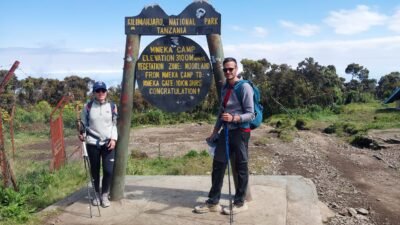
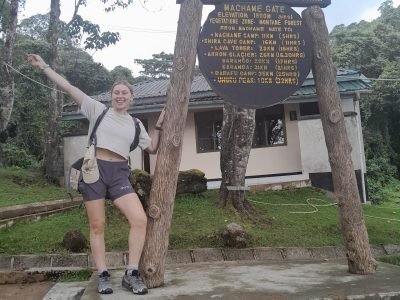
By late afternoon, climbers reach Machame Camp beneath towering rainforest edges.
Tents appear between giant heather plants while clouds drift low through the trees. Porters move efficiently through camp preparing meals and organizing equipment before temperatures begin dropping after sunset.
Camp life on Kilimanjaro develops its own rhythm quickly.
Tea arrives steaming in cold air.
Boots dry outside tents.
People exchange stories beneath fading light.
And gradually, the noise of ordinary life disappears.
Phones lose signal.
Schedules stop mattering.
The mountain becomes the entire world.
Climbing Toward the Shira Plateau
The second day changes Kilimanjaro completely.
The forest thins. Trees shrink lower against the slopes. The mountain opens outward into moorland and volcanic landscape where giant groundsels rise from the earth like strange prehistoric plants.
Clouds drift beneath the trail now.
And suddenly the scale of Kilimanjaro becomes visible.
The climb toward the Shira Plateau is one of the most beautiful transitions on the mountain. The land stretches endlessly beneath enormous African sky while distant ridges fade into mist and sunlight.
People begin walking more quietly here.
Partly from altitude.
Partly from awe.
The Emotional Shift at Altitude
Something changes emotionally above certain elevations.
The mountain becomes less social.
More internal.
Breathing grows deeper.
Walking slows naturally.
Silence stretches longer between conversations.
Trekkers begin focusing inward while the landscape grows increasingly barren and immense around them.
This is one reason Kilimanjaro affects people so deeply.
The mountain removes distraction.
And in that simplicity, many climbers discover unexpected clarity.
Lava Tower: Acclimatization and Reality
The journey toward Lava Tower often becomes the first serious altitude test for many climbers.
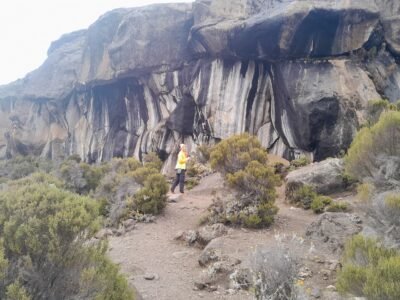
The landscape now feels harsh and volcanic.
Dark rock formations rise from alpine desert while cold wind sweeps across open terrain. Walking becomes slower. Appetite sometimes fades. Mild headaches can appear.
And suddenly Kilimanjaro feels less like adventure tourism and more like real mountain wilderness.
That shift matters psychologically.
Because the mountain begins demanding humility here.
Experienced guides monitor trekkers carefully during this section:
- hydration
- breathing
- energy levels
- altitude symptoms
The summit is still far away.
But the mountain has already started asking important questions.
Barranco Valley and the Beauty of the Unexpected
After Lava Tower, the route descends toward Barranco Camp.
And the change is dramatic.
Green valleys reappear unexpectedly beneath enormous cliffs while strange giant senecios stand against mist-covered slopes. The famous Barranco Wall rises above camp looking almost impossible from below.
Trekkers often stare at it nervously during dinner.
Tomorrow’s climb waits silently overhead.
Barranco Wall: Fear Turns Into Confidence
The Barranco Wall looks intimidating.
Especially at sunrise.
But surprisingly, many climbers later describe it as one of their favourite sections of the entire route.
The climb involves careful scrambling rather than technical climbing. Guides move steadily upward helping trekkers navigate narrow ledges and steep volcanic rock while incredible views open behind them across the mountain.
The atmosphere feels adventurous.
Alive.
People laugh nervously while climbing sections that looked impossible from below the night before.
And when trekkers finally reach the top, confidence changes noticeably.
The summit no longer feels abstract.
It begins feeling achievable.
Karanga Camp and the Rhythm of the Mountain
The trail toward Karanga Camp crosses rolling volcanic valleys where the mountain feels simultaneously empty and enormous.
Cloud shadows move across distant ridges. Ravens glide silently through thin air. Wind carries dust across barren slopes beneath skies so wide they almost feel oceanic.
Kilimanjaro has a strange ability to make people feel both very small and deeply connected at the same time.
And by now, most trekkers settle fully into mountain rhythm:
- wake
- walk
- breathe
- rest
- repeat
Simple.
Ancient.
Human.
Barafu Camp: Waiting Beneath the Summit
Barafu Camp does not feel comfortable.
It feels exposed.
Cold wind moves constantly through rocky slopes while tents cling to steep volcanic terrain high above the clouds. People rest quietly inside sleeping bags trying unsuccessfully to sleep before summit night begins.
Anxiety grows here.
Excitement too.
Everyone understands what comes next.
The summit push.
And the mountain above camp feels enormous in darkness.
Summit Night: Into Thin Air and Silence
Summit night begins before midnight.
The cold shocks people immediately outside the tents. Headlamps stretch upward across black volcanic slopes while climbers move slowly into freezing darkness.
This is the hardest part of Kilimanjaro.
Not because the trail is technical.
Because exhaustion, altitude, cold, and time all collide together.
Every step requires focus.
Breathing becomes rhythmic:
Step.
Breath.
Step.
Breath.
Guides encourage quietly while checking climbers constantly. Nobody rushes. Speed becomes irrelevant at this altitude.
Only persistence matters.
And somewhere high above, dawn waits beyond the darkness.
Stella Point and the First Light
Reaching Stella Point often feels emotional.
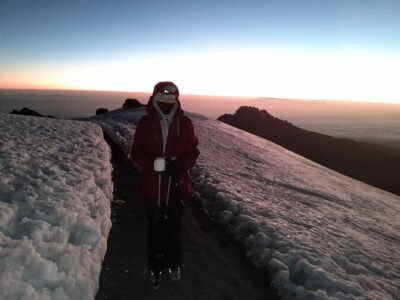
The horizon begins glowing faintly orange while glaciers emerge slowly from darkness beside the crater rim. Exhausted climbers stop quietly watching sunrise spread across Africa thousands of metres below.
And suddenly the hardest hours are behind them.
Uhuru Peak lies ahead along the crater rim.
The roof of Africa.
Uhuru Peak: Standing Above the Continent
At Uhuru Peak, the world feels strangely quiet.
Clouds stretch endlessly below the summit while ancient glaciers glow beneath sunrise light. The air is thin and freezing. Every movement feels slow.
Yet many climbers remember this moment with remarkable clarity years later.
Not because of triumph alone.
Because of perspective.
The mountain strips life down to essentials during the climb:
movement
breath
effort
weather
silence
And at the summit, that simplicity feels powerful.
Some people cry softly.
Some hug silently.
Some simply stare across the horizon unable to speak.
Kilimanjaro affects everyone differently.
But very few leave unchanged.
Descending Through the Mountain Again
Descending feels surreal after summit morning.
Within hours, climbers move from glaciers back into warmer air while exhaustion slowly gives way to relief. Energy returns gradually with oxygen.
And suddenly:
Birdsong returns.
Vegetation reappears.
Clouds rise beneath the trail once again.
The mountain begins releasing trekkers back toward ordinary life.
But memories remain vivid:
- summit sunrise
- cold volcanic wind
- headlamps in darkness
- silence above the clouds
- laughter in camp after difficult days
These fragments stay with people long after Kilimanjaro disappears from view.
Why the Machame Route Has Strong Summit Success
The Machame Route performs well partly because of its acclimatization profile.
Trekkers climb high during the day and descend lower to sleep, helping the body adjust gradually to altitude.
This route also provides:
- exceptional scenery
- diverse ecosystems
- strong acclimatization opportunities
- immersive mountain experience
- dramatic summit approach
It is physically demanding.
But deeply rewarding.
Comparing Kilimanjaro Routes
| Route | Atmosphere | Accommodation | Scenery |
|---|---|---|---|
| Machame Route | Scenic & adventurous | Camping | Exceptional |
| Marangu Route | Historic & social | Huts | Good |
| Lemosho Route | Remote & immersive | Camping | Outstanding |
| Rongai Route | Quiet & remote | Camping | Unique northern views |
Each route tells a different mountain story.
Machame’s story is dramatic landscape and emotional progression.
Best Time to Climb the Machame Route in 2026
January to March
- Cooler conditions
- Fewer crowds
- Snow possible near summit
- Beautiful photography light
June to October
- Drier weather
- Popular trekking season
- Clear summit views
- Excellent mountain conditions
November
- Short rains possible
- Greener lower slopes
- Quieter trails
Kilimanjaro changes constantly with season, weather, and light.
That unpredictability is part of its magic.
Combining Kilimanjaro With Safari and Zanzibar
Many trekkers continue their Tanzania journey with:
This combination creates an extraordinary East African experience:
mountain
wildlife
culture
coastline
Together they reveal the incredible diversity of Tanzania.
Field Notes From Kilimanjaro Guides
“Machame teaches patience quickly.”
“People arrive thinking about the summit. They leave remembering the journey.”
“The mountain decides the pace. Always.”
“Barranco Wall scares people at first. Then they end up loving it.”
Final Reflections: The Scenic Road Into the Clouds
The Machame Route remains one of the most extraordinary ways to experience Mount Kilimanjaro.
Not because it guarantees comfort.
But because it reveals the mountain slowly, honestly, and beautifully.
Through rainforest and volcanic wilderness.
Across ridges above the clouds.
Into freezing darkness beneath African stars.
It is a route where exhaustion and wonder exist together.
Where silence becomes memorable.
Where sunrise feels earned.
And for trekkers planning Kilimanjaro in 2026, the Machame Route offers far more than a summit attempt.
It offers immersion into the wild emotional rhythm of Tanzania’s greatest mountain — step by step toward the Roof of Africa. Book now your historic trek.




One thought on “Machame Route Trek 2026: The Wild Scenic Journey Up Kilimanjaro”