Arusha National Park Safari 2026: Tanzania’s Quiet Beginning to the Wild

Arusha National Park Safari 2026: Tanzania’s Quiet Beginning to the Wild
There is a particular kind of silence in Arusha National Park just after sunrise.
Not emptiness.
Alive silence.
The soft crunch of boots during a walking safari. Wind moving through highland forest. Colobus monkeys leaping across ancient fig trees somewhere overhead. In the distance, flamingos gather like pale brushstrokes across shallow alkaline lakes while the slopes of Mount Meru rise through drifting morning mist.
Most travellers arrive in northern Tanzania dreaming about the Serengeti.
About lions.
River crossings.
Great migrations.
And yet, quietly, almost humbly, Arusha National Park often becomes one of the most surprising parts of the journey.
Not because it overwhelms people.
But because it slows them down.
This is not a park of endless plains or giant predator spectacles every hour. It is something more intimate. More layered. A landscape where forest, mountain, crater, swamp, lake, and open grassland all seem to exist together within one compact wilderness.
And because of that, the park feels deeply alive.
Not rushed.
Not crowded.
Not demanding attention.
Just quietly wild.
For travellers beginning a Tanzania safari in 2026, Arusha National Park offers something increasingly rare in modern travel:
Space to observe slowly.
Where Arusha National Park Is Located
Arusha National Park lies just outside the safari capital of Arusha in northern Tanzania.
Unlike many famous safari destinations that require long drives or flights, Arusha National Park sits remarkably close to town. Within a relatively short drive, busy roads disappear and the wilderness begins almost unexpectedly.
That transition is part of the charm.
Coffee farms fade behind you. Villages become quieter. Forest thickens. Then suddenly giraffes appear beside the road while Mount Meru rises above the clouds.
For many travellers, this becomes the very first real feeling of safari.
And first impressions matter.
Why Arusha National Park Feels Different
Every Tanzanian park carries its own personality.
Serengeti National Park feels immense.
Tarangire National Park feels ancient.
Ngorongoro Crater feels dramatic.
Arusha National Park feels intimate.
The landscape changes constantly here.
One moment you are driving through rainforest beneath hanging moss and giant trees alive with monkey calls. Minutes later the forest opens into grassy clearings filled with buffalo and warthogs. Beyond that, shallow lakes shimmer beneath volcanic hills while flamingos drift through reflected sky.
The park never feels repetitive.
Instead, it feels layered.
Like several ecosystems folded together beneath the shadow of Mount Meru.
Mount Meru: The Quiet Giant
Towering above the park is Mount Meru, Tanzania’s second-highest mountain after Mount Kilimanjaro.
But Meru carries a different energy.
Kilimanjaro dominates conversations.
Meru whispers.
Its slopes remain wrapped in forest, cloud, and volcanic mystery. On clear mornings, the mountain appears almost impossibly beautiful above the park’s lakes and grasslands.
And because Meru receives fewer trekkers than Kilimanjaro, it retains a quieter atmosphere.
Guides often describe it as the mountain for travellers who love immersion rather than crowds.
Even from safari vehicles below, the mountain shapes the entire emotional atmosphere of the park.
Weather changes around it constantly.
Mist drifts through forest.
Rain arrives suddenly.
Sunlight breaks dramatically across volcanic ridges.
The landscape always feels alive.
The Forests of Arusha National Park
The forest here feels ancient.
Dense green canopies block sunlight while tangled roots disappear into dark volcanic soil. Blue monkeys move through branches overhead while black-and-white colobus monkeys leap gracefully between trees with astonishing elegance.
Sometimes the forest becomes completely quiet.
Then suddenly:
A hornbill calls loudly above the road.
Leaves shake violently as monkeys move through branches.
Buffalo emerge silently from vegetation.
Safari inside forest environments feels very different from open savannah driving.
Visibility shortens.
Sound becomes more important.
Atmosphere deepens.
And because predators remain hidden easily here, even simple drives carry tension.
The Momella Lakes
The Momella Lakes are among the park’s most beautiful surprises.
Seven shallow alkaline lakes spread across the landscape, each carrying slightly different mineral compositions and colours. Depending on season and light, the lakes shift between blue, green, silver, and pink.
Flamingos gather here seasonally in extraordinary numbers.
At sunrise, the reflections become surreal.
Still water.
Soft mist.
Thousands of pale birds moving slowly through mirrored sky.
And surrounding the lakes:
- Giraffes
- Waterbucks
- Zebras
- Buffalo
- Warthogs
The combination feels almost dreamlike.
Especially in early morning light.
Canoe Safaris: One of Tanzania’s Most Underrated Experiences
Unlike many safari parks in Tanzania, Arusha National Park offers canoe safaris on the Momella Lakes.
And the experience changes everything.
The silence becomes deeper on water.
No engine vibrations.
No dusty roads.
Only paddles moving gently across the lake surface while giraffes browse quietly along the shoreline.
Hippos occasionally surface nearby with heavy breaths. Fish eagles call overhead. Flamingos lift suddenly into the air in huge pink clouds.
Being low to the water changes perspective completely.
You stop feeling like an observer.
You feel part of the landscape itself.
For travellers seeking something more immersive than traditional game drives alone, canoe safaris often become unforgettable.
Walking Safaris in Arusha National Park
Arusha National Park is one of the best places in northern Tanzania for walking safaris.
And walking changes safari emotionally.
Inside vehicles, people often focus only on large animals. On foot, attention sharpens naturally toward smaller details:
- Animal tracks
- Bird calls
- Fresh elephant dung
- Broken branches
- Insect movement
- Wind direction
The bush becomes more immediate.
Even giraffes feel different when encountered on foot. Their height suddenly seems enormous. Buffalo become intimidating. The smell of wild herbs crushed beneath boots rises through warm air.
Walking safaris teach travellers how to notice.
And good guides make all the difference.
Experienced walking guides read the landscape constantly — not dramatically, but quietly, through years of familiarity with the bush.
Wildlife in Arusha National Park
Arusha National Park does not compete with Serengeti in sheer predator density.
And it does not need to.
The beauty here lies in diversity and atmosphere.
Wildlife commonly seen includes:
- Giraffes
- Zebras
- Buffalo
- Warthogs
- Waterbucks
- Bushbucks
- Hippos
- Blue monkeys
- Colobus monkeys
- Flamingos
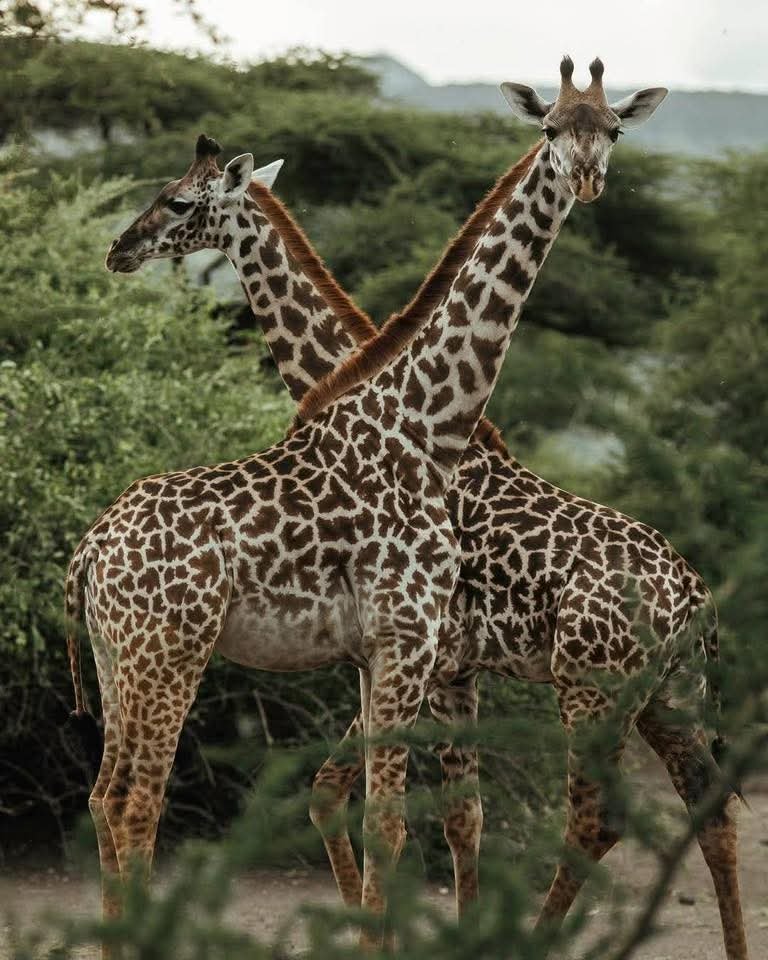
The park is especially famous for giraffes.
Huge herds move gracefully across open clearings beneath Mount Meru while forest edges create beautiful photographic backdrops.
And because visitor numbers are often lower than larger parks, sightings frequently feel peaceful rather than crowded.
The Absence of Lions Changes the Mood
Interestingly, lions are generally absent from Arusha National Park.
And this changes the atmosphere completely.
The park feels calmer somehow.
More reflective.
Animals behave differently without constant large predator pressure. Walking safaris become more accessible. Canoeing feels peaceful rather than tense.
The experience becomes less about chasing dramatic kills and more about immersion in landscape, sound, and movement.
That slower rhythm appeals strongly to many travellers.
Especially photographers, birders, couples, and people visiting Tanzania for the first time.
Birdlife in Arusha National Park
Birdlife here is extraordinary.
More than 400 species have been recorded within the park’s ecosystems, making Arusha an excellent destination for birdwatchers and photographers.
Common sightings include:
- Flamingos
- Fish eagles
- Hornbills
- Crowned cranes
- Kingfishers
- Turacos
- Bee-eaters
- Herons
And because habitats vary so dramatically between forest, lake, swamp, and grassland, bird diversity remains constantly interesting throughout the day.
Even travellers who never considered themselves bird enthusiasts often become fascinated after time in the park.
Safari changes attention slowly.
The Ngurdoto Crater
Sometimes called “Little Ngorongoro,” the Ngurdoto Crater adds another dramatic layer to the landscape.
Dense forest surrounds the crater rim while wildlife moves quietly below across swampy grasslands hidden inside the volcanic bowl.
Mist often hangs over the crater during early morning.
Buffalo appear like dark shadows through drifting fog while sunlight slowly burns through cloud cover above the forest canopy.
The atmosphere feels ancient.
Still.
Almost untouched.
Safari Mornings in Arusha
Safari mornings here feel gentle compared to the intensity of larger parks.
Cold mountain air drifts through open vehicle windows. Forest smells fresh after night rain. Sunlight filters softly through trees while monkeys begin moving overhead.
There is less pressure to “find something dramatic.”
And that allows travellers to relax into the experience more naturally.
You begin noticing details:
The colour of moss on volcanic rocks.
The sound of flamingo wings lifting from water.
Mist moving slowly across Mount Meru slopes.
Arusha teaches patience beautifully.
Best Time to Visit Arusha National Park in 2026
Dry Season: June to October
This period offers:
- Clear mountain views
- Easier wildlife visibility
- Cooler mornings
- Excellent walking safaris
Dry season light can be spectacular, especially around the Momella Lakes during sunrise and sunset.
Green Season: November to May
The green season transforms the park dramatically.
Forest becomes lush and intensely green while waterfalls strengthen and birdlife becomes vibrant.
Afternoon storms build around Mount Meru creating cinematic skies across the lakes and grasslands.
For photographers especially, this period can feel magical.
Why Arusha National Park Works Beautifully at the Start of Safari
Arusha National Park introduces travellers to safari gradually.
That matters more than people realise.
The park allows visitors to adjust emotionally and physically to safari rhythm before moving toward larger ecosystems like:
- Tarangire National Park
- Serengeti National Park
- Ngorongoro Conservation Area
You begin learning how to observe.
How to slow down.
How to notice movement.
How to sit quietly inside the landscape.
By the time travellers reach the Serengeti afterward, they often experience it more deeply because Arusha prepared them gently.
Suggested Safari Combination for 2026
Many travellers combine Arusha National Park with:
Arusha becomes the soft beginning before the scale and drama of the northern circuit unfolds fully.
Field Notes From Local Guides
“People underestimate this park until they slow down enough to feel it.”
“Mount Meru changes every hour depending on weather and light.”
“Walking safari here teaches guests how to really see Africa.”
“The silence on the lakes in the early morning stays with people.”
Responsible Travel in Arusha National Park
Because the park is relatively accessible from Arusha town, it plays an important role in Tanzanian conservation and environmental education.
Responsible safari practices matter deeply here:
- Respect wildlife space
- Avoid excessive vehicle noise
- Support local guides
- Protect fragile ecosystems around lakes and forests
- Appreciate safari beyond only predator sightings
The beauty of Arusha lies in balance.
Landscape.
Wildlife.
Stillness.
What Travellers Often Remember Most
Interestingly, people rarely leave Arusha National Park talking only about animals.
Instead, they remember feelings.
Cold morning air beneath Mount Meru.
Colobus monkeys moving through misty forest.
Flamingos reflected across silent lakes.
The sensation of walking quietly through wild country on foot.
The park stays in memory differently.
Subtly.
Final Reflections: Tanzania’s Most Gentle Wild Place
Not every safari destination needs to overwhelm visitors with drama.
Some places work more quietly.
Arusha National Park belongs to that category.
Its beauty reveals itself gradually through atmosphere, detail, and rhythm rather than spectacle alone.
And perhaps that is why so many travellers remember it so fondly.
Because in a world increasingly dominated by speed, noise, and constant stimulation, Arusha offers something gentler:
A chance to slow down inside nature.
To listen carefully.
To observe patiently.
To begin understanding East Africa not only through famous wildlife moments, but through landscape itself.
For travellers exploring Tanzania in 2026, Arusha National Park remains one of the country’s most underrated safari experiences — intimate, atmospheric, and deeply human in the way it connects people to the wild. Book now your safari.