Safety and Tips for Mount Kilimanjaro Trek 2026: What the Mountain Quietly Teaches You


Safety and Tips for Mount Kilimanjaro Trek 2026: What the Mountain Quietly Teaches You
The mountain always looks peaceful from far away.
From the roads near Moshi.
From coffee farms beneath the slopes.
From airplane windows drifting across East Africa at sunrise.
White summit. Calm clouds. Silent beauty.
But Kilimanjaro is not gentle simply because it is beautiful.
And the people who succeed on the mountain are rarely the loudest, strongest, or fastest.
Usually, they are the ones who listen carefully.
To their guides.
To their breathing.
To the weather.
To the pace of the mountain itself.
Every year, trekkers arrive in Tanzania imagining Kilimanjaro as a physical challenge alone. They train their legs. Buy expensive gear. Research summit temperatures obsessively.
Yet the mountain often teaches something unexpected.
That safety on Kilimanjaro is not built through toughness.
It is built through patience.
For climbers planning a Mount Kilimanjaro trek in 2026, understanding safety properly can transform the entire experience — not by removing adventure, but by allowing trekkers to experience the mountain more deeply, calmly, and successfully.
Because Kilimanjaro rewards preparation.
Quietly. Consistently. Without compromise.
Kilimanjaro Is Not a Technical Mountain — But It Is Still Serious
One of the most misunderstood things about Kilimanjaro is this:
You do not need ropes or technical climbing skills to reach the summit.
That surprises many first-time trekkers.
But the absence of technical climbing does not make the mountain easy.
Kilimanjaro’s greatest challenge is altitude.
Not cliffs.
Not glaciers.
Not dangerous wildlife.
Altitude.
The summit of Uhuru Peak rises to 5,895 metres above sea level. At that height, oxygen levels are dramatically lower than most people are accustomed to. The body reacts unpredictably. Strong athletes struggle. Older slower trekkers sometimes perform beautifully.
The mountain decides differently for everyone.
And that is why safety begins long before summit night.
The Most Important Safety Rule on Kilimanjaro: Pole Pole
“Pole pole.”
Every guide on Kilimanjaro says it constantly.
Slowly slowly.
At first, many trekkers smile politely and continue walking too fast.
Then altitude arrives.
And suddenly those two words become the entire strategy.
The safest climbers on Kilimanjaro are rarely the fastest.
They are:
- calm
- steady
- hydrated
- patient
- disciplined with pacing
The mountain punishes rushing surprisingly quickly.
Walking slowly allows:
- better oxygen adaptation
- lower exhaustion
- improved acclimatization
- safer summit attempts
Kilimanjaro is not a race.
The mountain teaches rhythm instead.
Choosing the Right Route Matters for Safety
Some Kilimanjaro routes are safer for acclimatization than others.
Longer routes generally allow the body more time to adjust naturally to altitude.
Routes Often Recommended for Better Acclimatization
| Route | Acclimatization Quality | Atmosphere |
|---|---|---|
| Lemosho Route | Excellent | Scenic & gradual |
| Machame Route | Very good | Dramatic & immersive |
| Rongai Route | Good | Quiet & remote |
Shorter Routes Require More Caution
| Route | Consideration |
|---|---|
| Marangu Route | Faster ascent can challenge acclimatization |
Longer itineraries usually improve summit safety significantly.
Extra days matter.
Not only physically.
Emotionally too.
Understanding Altitude Sickness
Altitude sickness is the most important safety issue on Kilimanjaro.
And it can affect anyone.
Fit people.
Young people.
Experienced hikers.
No one is immune.
Mild symptoms often include:
- headache
- nausea
- dizziness
- fatigue
- loss of appetite
- poor sleep
These symptoms are common at altitude.
But experienced guides monitor carefully because severe altitude sickness can become dangerous if ignored.
That is why good mountain crews conduct regular health checks:
- oxygen saturation monitoring
- symptom discussions
- pace management
- hydration reminders
The safest trekkers are honest about how they feel.
Hiding symptoms helps nobody on the mountain.
Good Guides Save Treks — And Sometimes Lives
The quality of your guide matters enormously on Kilimanjaro.
Experienced Tanzanian guides understand:
- altitude behaviour
- weather patterns
- pacing strategy
- emergency response
- emotional management during summit night
And perhaps most importantly:
They know when a climber should stop.
Good guides do not chase summit statistics recklessly.
They prioritize safety first.
Always.
The strongest mountain crews create calm confidence around climbers. They recognize problems early before they become serious. They encourage without pushing dangerously.
And many climbers later realize the summit was only possible because of the quiet professionalism of the guides beside them.
Hydration: The Mountain Drains People Quietly
Cold mountain air hides dehydration surprisingly well.
Trekkers often sweat less visibly at altitude, but the body continues losing fluid constantly through breathing and exertion.
Hydration becomes critical for:
- acclimatization
- energy
- headache prevention
- recovery
- circulation
Most guides encourage climbers to drink several litres of water daily on the mountain.
Not because it feels natural.
Because it helps the body survive altitude stress more effectively.
Tea also becomes part of Kilimanjaro rhythm:
- morning tea
- tea at camp
- warm drinks before summit night
Simple things matter deeply on the mountain.
Clothing Mistakes Can Ruin a Trek
Kilimanjaro crosses several climate zones.
Trekkers may experience:
- humid rainforest heat
- cold moorland wind
- freezing summit temperatures
- intense equatorial sunlight
Layering matters far more than single heavy clothing items.
Good mountain clothing systems include:
- moisture-wicking base layers
- insulating mid-layers
- waterproof outer shells
- warm gloves
- thermal hats
- proper hiking boots
Cotton performs poorly on the mountain because it traps moisture and cold.
And summit night can become dangerously uncomfortable without proper insulation.
Summit Night Is the Hardest Part
Nothing prepares people completely for summit night.
The cold.
The darkness.
The altitude.
The exhaustion.
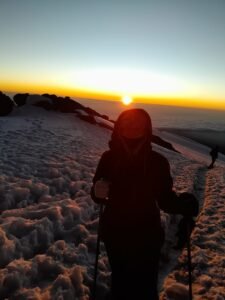
Trekkers leave camp around midnight moving slowly upward beneath African stars while temperatures drop far below freezing.
This is where pacing becomes everything.
People who rush often collapse emotionally and physically later.
Good summit strategy includes:
- very slow movement
- controlled breathing
- frequent small breaks
- staying warm
- eating small snacks regularly
And mentally, summit night requires patience more than aggression.
The mountain rewards steady effort.
Not ego.
Food on the Mountain Matters More Than Many Expect
Altitude often reduces appetite.
Unfortunately, the body still needs energy constantly.
Good mountain crews prepare warm meals specifically designed to support climbers during altitude stress:
- soups
- rice
- vegetables
- pasta
- fruit
- porridge
- tea
Even when appetite disappears, eating remains important.
The body burns enormous energy simply adapting to altitude and cold.
Trekkers who stop eating completely often struggle badly later in the climb.
Weather Changes Fast on Kilimanjaro
Kilimanjaro creates its own weather patterns constantly.
Rainforest rain can appear suddenly.
Cold wind sweeps across alpine ridges without warning.
Summit temperatures shift dramatically overnight.
Trekkers should prepare mentally for unpredictability.
That includes:
- waterproof gear
- dry backup clothing
- patience during weather delays
- emotional flexibility
The mountain rarely follows human schedules perfectly.
And experienced climbers accept this early.
Mental Preparation Is Often Overlooked
Many trekkers train physically for Kilimanjaro.
Fewer prepare mentally.
But long trekking days, altitude discomfort, cold nights, and summit exhaustion affect emotions deeply on the mountain.
At certain moments, almost everyone questions themselves.
That is normal.
Good mental preparation includes:
- realistic expectations
- patience
- emotional flexibility
- accepting discomfort
- focusing on steady progress
Kilimanjaro rarely rewards perfection.
It rewards persistence.
Porters: The Hidden Strength of Kilimanjaro
Behind every successful trek stands a mountain crew carrying extraordinary responsibility.
Porters move equipment through difficult terrain daily:
- tents
- food
- water
- cooking gear
- medical supplies
Often in difficult weather.
Long before trekkers wake, crews are already preparing the day.
Respecting porters and guides is part of Kilimanjaro culture.
The climb is never individual achievement alone.
It is shared effort.
Essential Kilimanjaro Safety Packing List
Important Trekking Gear
- waterproof hiking boots
- thermal layers
- insulated jacket
- rain gear
- headlamp
- trekking poles
- warm gloves
- sun protection
- reusable water bottles
- sleeping bag rated for cold temperatures
Health Essentials
- personal medication
- altitude medication if prescribed
- blister care
- lip balm
- sunscreen
- hydration salts
Small Comfort Items
- snacks
- camera
- power bank
- wet wipes
- extra socks
Small comforts become surprisingly meaningful at altitude.
The Importance of Rest Before the Trek
Many travellers make one major mistake before Kilimanjaro:
They arrive already exhausted.
Long international flights, busy safaris, jet lag, and poor sleep can weaken the body before the climb even begins.
Arriving early in Tanzania helps enormously.
A quiet night in Moshi or Arusha before the trek allows climbers to:
- recover from flights
- organize gear
- hydrate properly
- mentally prepare
The mountain is demanding enough already.
Starting rested matters.
Best Time for a Safe Kilimanjaro Trek in 2026
January to March
- cooler conditions
- fewer crowds
- possible summit snow
- dramatic scenery
June to October
- drier conditions
- clearer summit visibility
- popular trekking season
- excellent trail conditions
November
- short rains possible
- greener lower slopes
- quieter atmosphere
Every season changes the mood of Kilimanjaro.
No climb ever feels identical.
Combining Kilimanjaro With Safari and Zanzibar
Many trekkers continue after Kilimanjaro toward:
After days on cold volcanic slopes, the transition toward wildlife plains or warm Indian Ocean beaches feels almost dreamlike.
Tanzania reveals itself slowly this way.
Mountain.
Savannah.
Coastline.
Each landscape changing the rhythm completely.
Field Notes From Kilimanjaro Guides
“The mountain teaches humility quickly.”
“The slow climbers often summit strongest.”
“Altitude does not care how athletic someone is.”
“Good preparation creates calm on the mountain.”
“The summit belongs to the whole team.”
Final Reflections: Safety Is Part of the Experience
Safety on Mount Kilimanjaro is not separate from adventure.
It is part of the adventure.
The safest climbers are often the ones who experience the mountain most deeply because they move with awareness rather than urgency.
They notice:
- changing light across volcanic ridges
- silence above the clouds
- distant glaciers at sunrise
- the steady encouragement of mountain crews
- the rhythm of their own breathing in thin air
Kilimanjaro is not simply a summit.
It is a gradual journey through discomfort, beauty, patience, exhaustion, wonder, and perspective.
And for trekkers planning a Kilimanjaro climb in 2026, proper preparation and safety awareness do not reduce the magic of the mountain.
They allow the experience to unfold more fully.
Slowly.
Carefully.
Step by step toward the Roof of Africa. Book now your historic trek.